
AARTOS DDS (Drone Detection System)
Passive RF-based drone detection system with up to 80 km range, 1° direction-finding accuracy, and AI-assisted multi-target tracking — proven at major international airports including London Heathrow and Muscat.
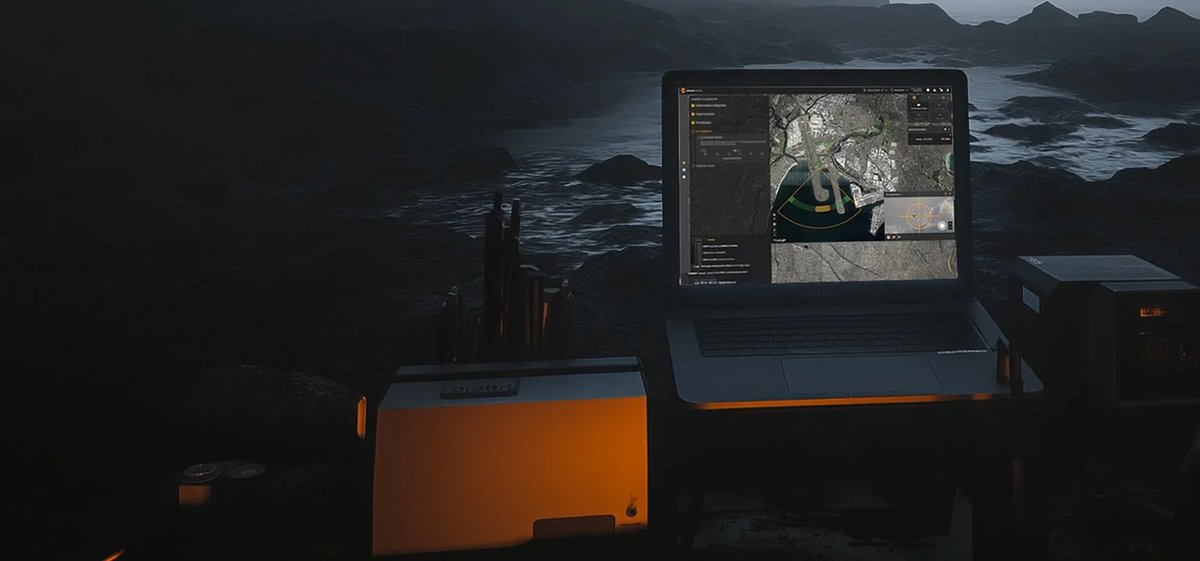
The AARTOS Drone Detection System (AARTOS DDS) is a passive, radio-frequency detection platform that identifies, locates, classifies, and tracks unmanned aerial vehicles by monitoring the electromagnetic emissions they and their remote controllers generate. Because it relies entirely on intercepted RF signals rather than radar or optical sensors, it operates effectively at night, in fog, in sandstorm conditions, and against pre-programmed autonomous drones that still transmit telemetry.
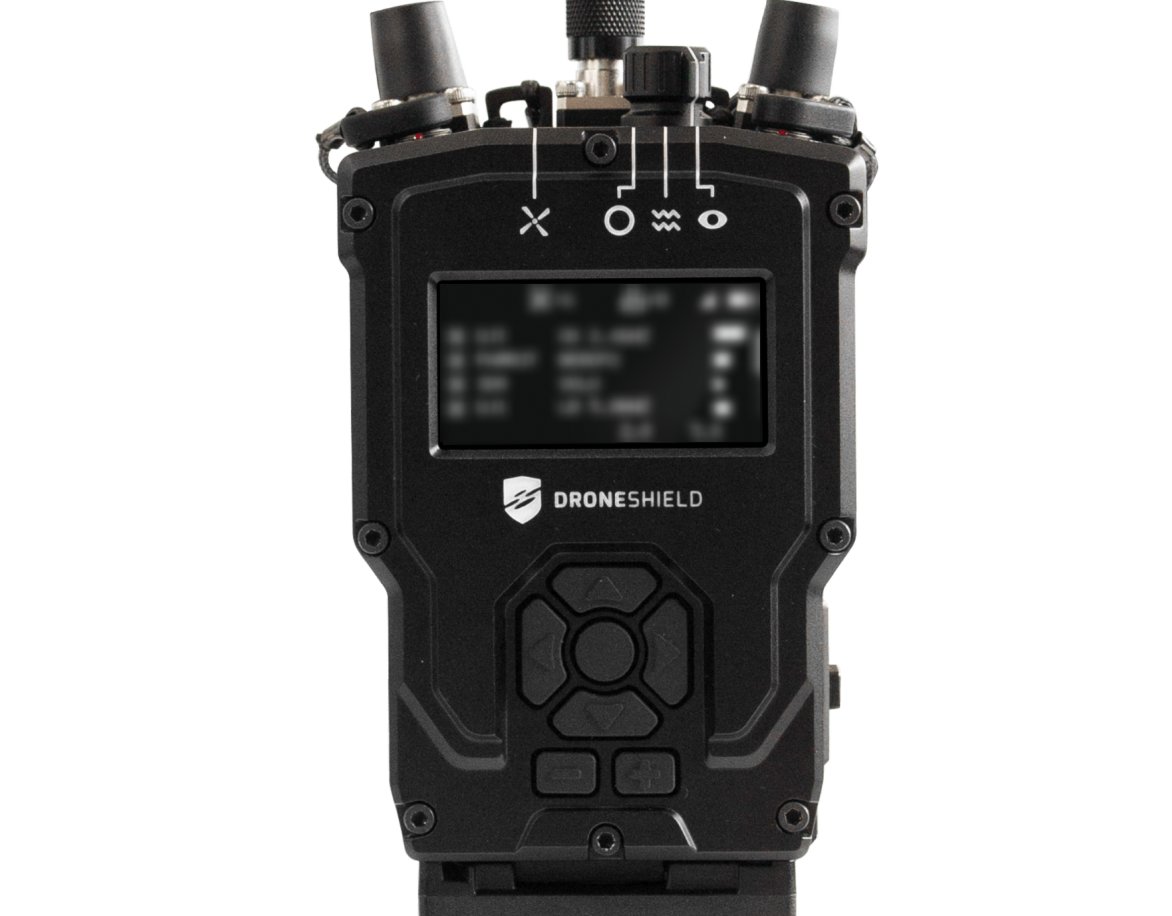
The system is sold in three main configurations scaled to site size. The X2 is a portable, laptop-deployable unit suited to temporary event security, with coverage out to 5 km across 2.4 GHz and 5.8 GHz. The X7 adds three independent receivers, 8 directional sectors covering 700 MHz–6 GHz, and direction-finding accuracy of 5°–6°, making it the standard configuration for medium perimeter sites. The flagship X9 deploys four or more independent receivers across 16 sectors, covers 400 MHz–6 GHz continuously (with an optional extension to 10 MHz–8 GHz), achieves 1°–3° bearing accuracy, and provides detection at up to 14 km in standard mode, 40 km in long-range configuration, and 80 km in the military-grade build. Multiple X9 nodes can be networked for borderless large-area coverage.
The RTSA-Suite PRO software layer applies AI-based multi-target pattern recognition to separate drone RF signatures from background RF noise, identifies drone type and manufacturer, locates the drone operator independently of the drone, and presents everything in a 3D flight-path view with heading, altitude, and velocity data. The platform has accumulated over 650 installations and is operationally deployed at London Heathrow, Changi International (Singapore), and Muscat International (Oman), as well as at summit-level VIP protection events including the NATO Hague Summit and G20 Rio de Janeiro.
For Gulf airport operators the X9 is the appropriate baseline: its 16-sector architecture handles the multi-runway layouts of major hubs, its ultra-wideband coverage captures the newer 900 MHz and sub-GHz drone links entering the market, and the networked configuration scales across the perimeter distances typical of DXB, RUH, or MCT.
Technical specifications.
| Detection range (X9 standard) | up to 14 km |
| Detection range (X9 long range) | up to 40 km |
| Detection range (X9 military) | up to 80 km |
| Detection range (X2/X7) | up to 5 km |
| Frequency coverage (X9) | 400 MHz – 6 GHz (optional 10 MHz – 8 GHz) |
| Frequency coverage (X7) | 700 MHz – 6 GHz |
| Frequency coverage (X2) | 2.4 GHz + 5.8 GHz |
| Independent receivers (X9) | 4+ |
| Directional sectors (X9) | 16 |
| Tracking accuracy (X9) | 1° – 3° |
| Sweep rate | >1,000 full sweeps per second |
| Drone detection rate | >99% of commercial drones |
| Installations worldwide | 650+ |
| Software platform | RTSA-Suite PRO with AI multi-target recognition |
Use cases.
- ›Airspace protection around commercial airport runways, taxiways, and approach corridors — detecting and tracking all unauthorized drone intrusions in real time
- ›Operator location: identifying and geolocating the drone pilot separately from the drone to enable a law-enforcement response
- ›Critical infrastructure perimeter security for power plants, desalination facilities, and government compounds across the GCC
- ›Large-area networked deployment linking multiple X9 nodes across extended borders or multi-runway airport estates
- ›Integration with AARTOS jamming systems to provide fully autonomous detect-and-defeat capability under unified software control
- ›Event and VIP protection for high-profile summits, airshows, and national celebrations
Replacements & compatible alternatives.
Comparable Counter-UAS & Base Air Defence from other suppliers. Cross-shop on specs — confirm exact fit and compatibility with the supplier before specifying.