
Trainol 6 / Trainol 3
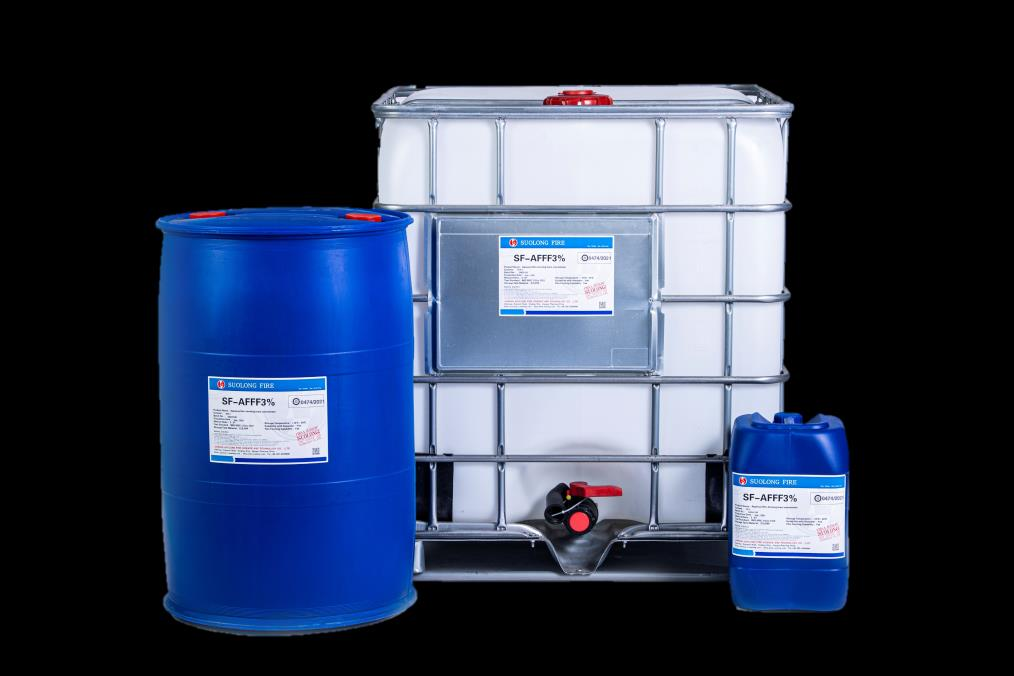
Fluorine-free training foam concentrates in 3% and 6% versions that replicate the induction behaviour of aviation-standard AFFF, enabling realistic crew training and vehicle testing without PFAS contamination.
Trainol 6 and Trainol 3 are fluorine-free training foam concentrates (TF class) developed by Angus Fire specifically for the aviation sector. Trainol 6 operates at 6% and is formulated to mimic the induction and proportioning behaviour of Angus TridolC6 S6 AFFF — the long-standing industry benchmark for 6% aviation foam. Trainol 3 operates at 3% and mirrors the characteristics of Angus Tridol S AFFF, the 3% equivalent. Both products replicate the foam output and flow properties of their AFFF counterparts closely enough for use in routine crew training exercises, equipment commissioning, and vehicle foam-system testing without exposing the environment to PFAS-containing AFFF.
The training foam use case is operationally significant because airports are required to conduct regular ARFF crew exercises under CAA and ICAO mandates, and ARFF vehicles must be periodically tested to verify proportioner calibration and nozzle performance. Historically these exercises consumed operational AFFF, depositing PFAS into ground and surface water. Trainol removes that environmental liability while maintaining exercise fidelity: both products have virtually identical induction characteristics to their AFFF analogues, so crews train on the system behaviour they will encounter in a real incident.
Both variants are yellow-coded to prevent confusion with operational concentrates and must not be used on real fires. Shelf life is 2 years from purchase — intentionally short to ensure training stock is replaced before degradation and to prevent stockpiling that could be mistaken for operational foam. Physical properties: specific gravity 1.00–1.02 (Trainol 6) / >1.01 (Trainol 3), viscosity approximately 1–3 mm²/s, pH 7.5–8.5. Both are readily biodegradable, free of fluorosurfactants and glycol ethers, and compliant with Civil Aviation and Environment Agency regulatory requirements.
Technical specifications.
| Trainol 6 induction rate | 6 % |
| Trainol 3 induction rate | 3 % |
| AFFF analogue (Trainol 6) | Angus TridolC6 S6 AFFF |
| AFFF analogue (Trainol 3) | Angus Tridol S AFFF |
| Appearance | Yellow liquid (colour-coded, not operational) |
| Specific gravity @ 20 °C (Trainol 6) | 1.00–1.02 |
| Specific gravity @ 20 °C (Trainol 3) | >1.01 |
| pH @ 20 °C | 7.5–8.5 |
| Viscosity @ 20 °C (Trainol 6) | ~1 mm²/s |
| Viscosity @ 20 °C (Trainol 3) | 1–3 mm²/s |
| Expansion ratio | >7:1 |
| 25% drainage time (Trainol 6) | >3 min 30 sec |
| 25% drainage time (Trainol 3) | >3 minutes |
| Shelf life | 2 years from purchase |
| Biodegradability | Readily biodegradable |
| Fluorosurfactants | None |
| Regulatory compliance | Civil Aviation and Environment Agency requirements |
| Max continuous storage temp | 49 °C |
Use cases.
- ›Mandatory ARFF crew training exercises requiring realistic foam system performance without PFAS environmental deposition
- ›ARFF vehicle commissioning and proportioner calibration verification without consuming operational AFFF stock
- ›Periodic nozzle pattern and foam quality acceptance testing on new crash tender deliveries
- ›Airports transitioning to F3 operational foams that require training stock matching the 6% or 3% induction rate of legacy AFFF systems
- ›Environmental compliance programmes where PFAS deposition from training activities must be eliminated or minimised
Replacements & compatible alternatives.
Comparable Fire Safety & Rescue from other suppliers. Cross-shop on specs — confirm exact fit and compatibility with the supplier before specifying.