Pathfinder Receiver (Base Station Kit)
MIL-STD-810-rated base station that turns Pathfinder ground sensors into a live intrusion-alert network
The Pathfinder Receiver is the fixed-site base station at the heart of a Pathfinder unattended ground sensor network. It receives detection transmissions from hand-emplaced Pathfinder Mini and XL seismic sensors over ARA's simplified wireless architecture — typically up to 10 km at ground level depending on terrain, and considerably further when the antenna is elevated — with no repeaters, gateways or internet connectivity required, and presents validated footstep and vehicle alerts on the operator's map display in the Pathfinder base-station software.
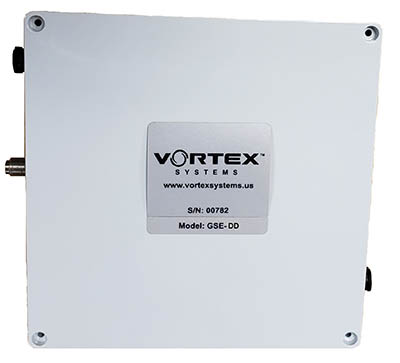
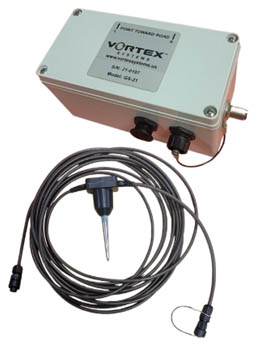
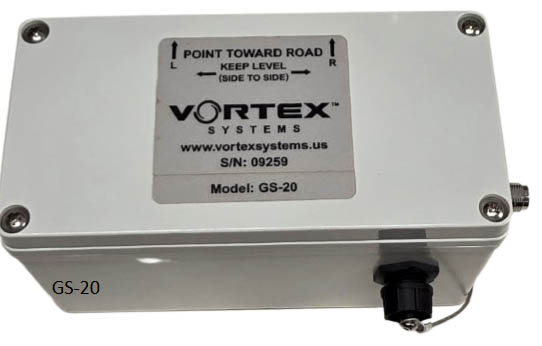
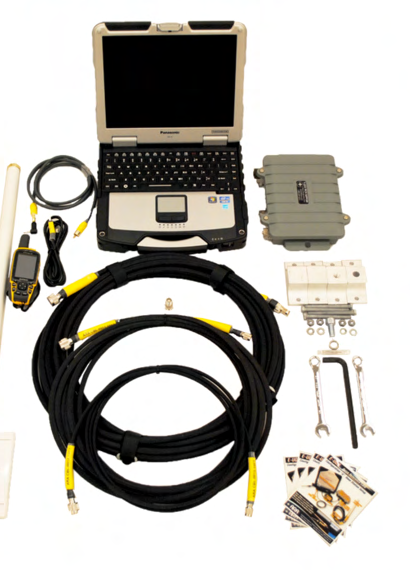
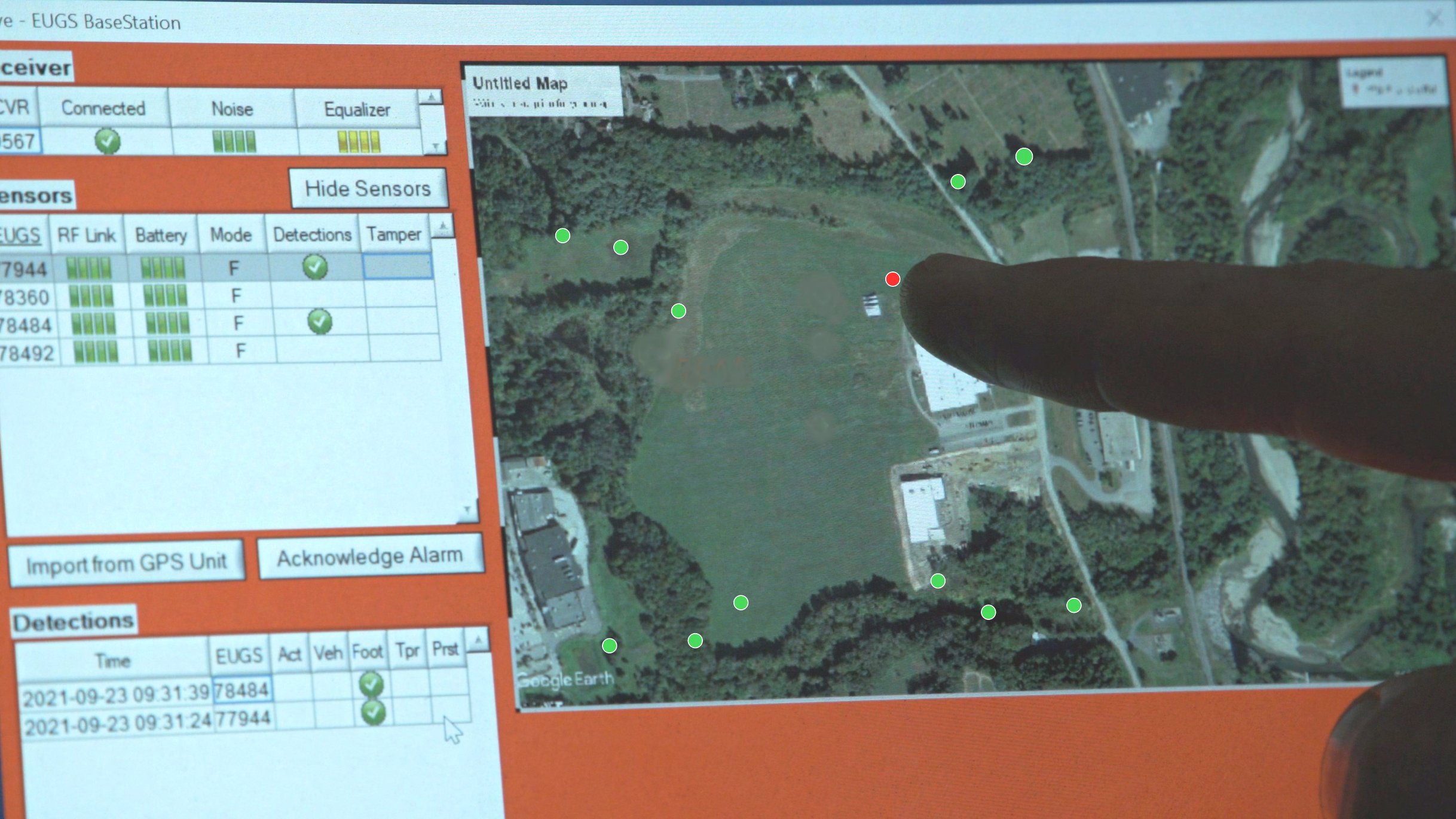
The receiver ships as a complete kit designed to be operational in minutes: a base station with the Pathfinder software installed, a waterproof Ethernet receiver, antenna, ten-foot antenna cable, antenna mounting hardware, installation tools, user manual and quick-reference cards. ARA's kit documentation shows the base station delivered as a ruggedised laptop with the Pathfinder software and mapping pre-installed. On the software map, emplaced sensors appear as bright green points; when a monitored detection occurs, audible and visible alarms trigger immediately and the detection log records the sensor, time and classification (footstep or vehicle).
The waterproof Ethernet receiver unit itself measures 2.1 x 7.2 x 8.4 in (H x D x W), weighs 3.76 lb and is built to military environmental standards: MIL-STD-810 Method 506.4 Procedure I (rain) and Method 510.4 Procedures I and II (blowing dust and sand), operating from -32 C to +49 C and tolerating storage from -33 C to +71 C. Field connections use two MIL-style bayonet connectors for power and RS-232 serial, a waterproof RJ-45 Ethernet port and a TNC female antenna port, with universal 100-240 VAC 47-63 Hz line power converted to 12 VDC.
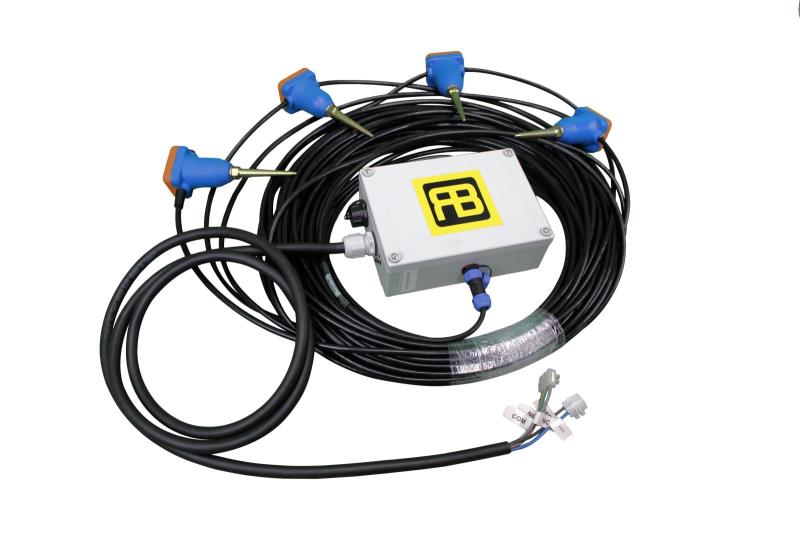
A standard sensor kit pairs the receiver with 60 Mini or 30 XL sensors, with individual quantities customisable, and additional sensors integrate seamlessly to expand detection coverage. ARA provides interface control documents for integrating alerts with cameras (slew-to-cue) and video management systems, and the system integrates with the Tactical Assault Kit (TAK) for military users. Typical roles include border-surveillance sensor networks, base and critical-infrastructure perimeter monitoring, and private-security estates. Pathfinder is classified ECCN 6A999.a under US Export Administration Regulations.
Technical specifications.
| Sensor link range | typically up to 10 km, terrain dependent; elevating the receiver antenna greatly increases effective range |
| Standard sensor pairing | Kits normally include 60 Mini or 30 XL sensors; individual quantities customisable and expandable |
| Deployment | User-friendly, ready to use in minutes; no internet, gateways or relay infrastructure required |
| Connectors | 2x MIL-style bayonet (power, RS-232 serial); 1x waterproof RJ-45 Ethernet; 1x TNC female antenna |
| Export classification | ECCN 6A999.a under US Export Administration Regulations; export licence may be required depending on destination, user and end use |
| Environmental rating | MIL-STD-810: Method 506.4 Procedure I (rain); Method 510.4 Procedures I and II (blowing dust and sand) |
| Operating temperature | -32 to +49 C (-25 to +120 F) |
| Storage temperature | -33 to +71 C (-28 to +160 F) |
| Power | 100-240 VAC, 47-63 Hz line power providing 12 VDC |
| Dimensions (H x D x W) | 2.1 x 7.2 x 8.4 in |
| Weight | 3.76 lb |
| Kit contents | Base station with Pathfinder software installed, waterproof Ethernet receiver, antenna, 10 ft antenna cable, antenna mounting hardware, installation tools, user manual, quick-reference cards |
Available variants.
Certifications.
Use cases.
- ›border surveillance sensor network base station
- ›airport and base perimeter security operations
- ›critical infrastructure intrusion monitoring C2
Replacements & compatible alternatives.
Comparable products from other suppliers. Cross-shop on specs — confirm exact fit and compatibility with the supplier before specifying.