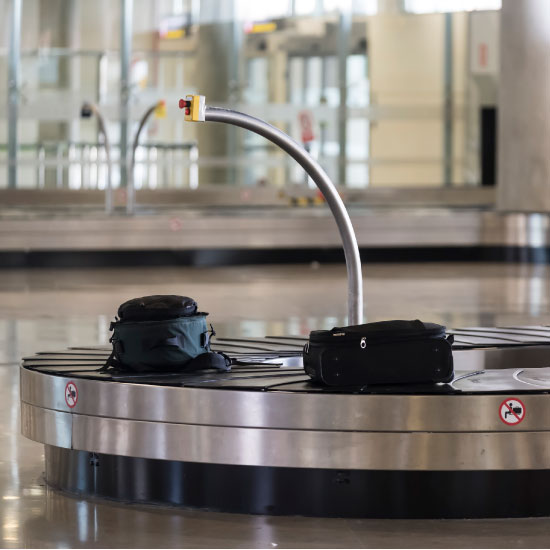

autover Independent Carrier System
Cart-based ICS using individual autoca carriers on a passive steel rail, sized for airports processing up to 4,800 bags per hour with lower infrastructure cost than tote-based systems.
The BEUMER autover Independent Carrier System is a cart-based ICS that delivers the principal advantages of independent carrier technology — 100% bag traceability, gentle single-item handling, and scalable capacity — at a capital and infrastructure cost calibrated for small to medium-sized airports. Each item of baggage is placed on an individual autoca carrier (a wheeled cart) that travels independently along a passive steel rail. The rail carries no moving mechanical parts, motors, or embedded sensors — it is a steel guideway with power and data cabling. All intelligence, propulsion, and tracking resides in the autoca cart itself, which means maintenance actions are performed on carts in a dedicated offline area rather than on the fixed infrastructure, dramatically reducing system downtime.
The throughput ceiling of 4,800 bags per hour covers airports in the 2.5 to 15 million passengers per year range — which includes the majority of regional and secondary airports in the GCC, wider Middle East, and emerging markets investing in BHS modernisation. Capacity expansion is done by adding carts to the pool and updating the software route map; no structural modification to the rail is required. This makes the autover particularly well-suited to airports with phased growth plans or uncertain passenger forecasts.
Multiple cart sizes run on the same rail, handling bags from cabin-size items to oversized luggage without a separate dedicated line. The system also functions as an inter-terminal connector and can integrate with existing conventional conveyor BHS as a supplementary transport backbone. For airports in the GCC that are expanding in stages or upgrading from legacy belt-conveyor systems, the autover's expandability and low OPEX — fewer spare parts, reduced staffing requirement, energy savings relative to conveyor-dense BHS — represent the key procurement advantages.
Technical specifications.
| Maximum throughput | 4,800 bags/hour |
| Target airport size | 2.5 million+ passengers per year |
| Rail design | Passive steel rail — no moving parts, motors, or sensors in track |
| Carrier | autoca cart — self-propelled, individually intelligent |
| Cart sizes | Multiple sizes on same track; standard and oversized baggage |
| Bag tracking | 100% traceable; built-in cart monitoring for predictive maintenance |
| Capacity expansion | Add carts and update software; no infrastructure modification required |
Use cases.
- ›Small to medium airports (2.5–15 million pax/year) seeking ICS technology within a constrained capital budget
- ›Airports with phased capacity growth plans requiring incremental expansion without civil works
- ›Inter-terminal baggage connections at airports with dispersed terminal buildings
- ›Brownfield BHS modernisation projects replacing legacy conveyor systems with a trackable carrier platform
- ›Operations where low OPEX and predictive maintenance capability are primary procurement criteria
Replacements & compatible alternatives.
Comparable Baggage Handling Systems from other suppliers. Cross-shop on specs — confirm exact fit and compatibility with the supplier before specifying.