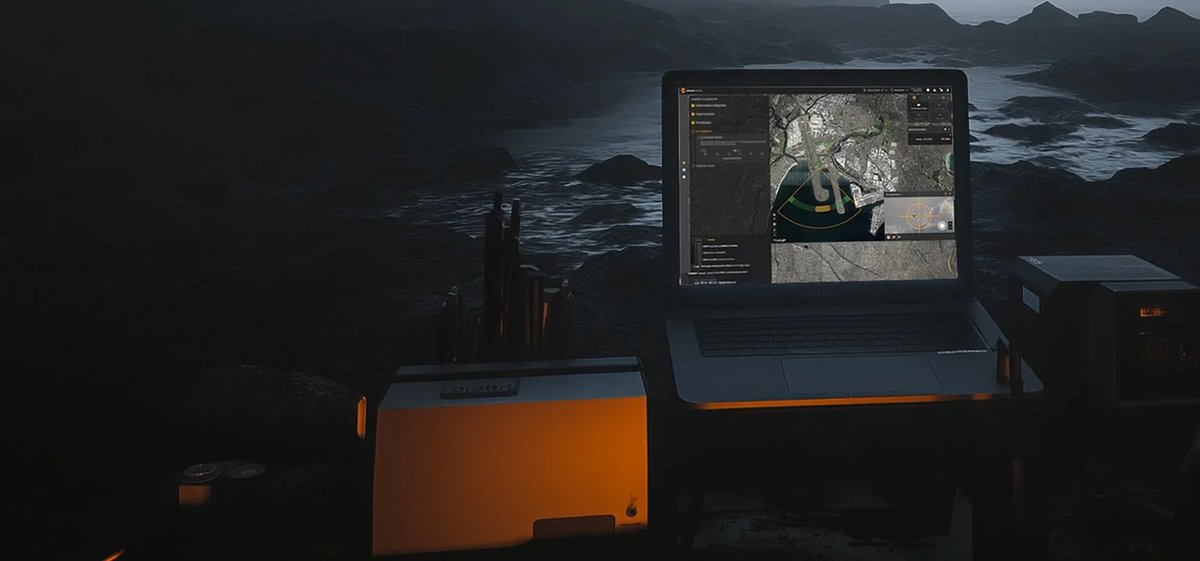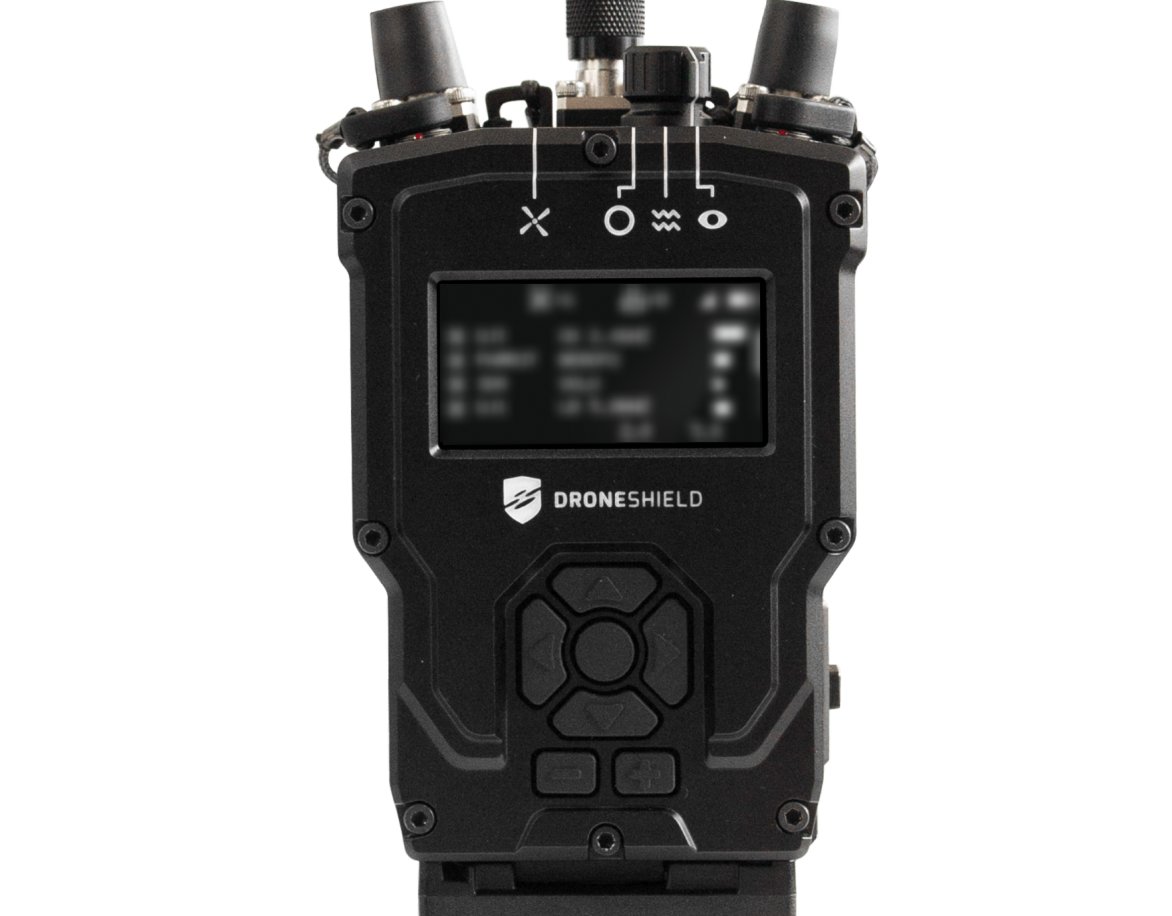

A400 Series Radar
Solid-state Ku-band air security radar detecting drones from nano-quadcopter to fixed-wing at ranges up to 20 km with sub-second spotlighting.
The A400 Series is a family of non-rotating, electronically scanned (e-scan) FMCW Doppler radars built specifically for near-ground airspace security. Operating in the Ku band (15.7–17.2 GHz), each unit uses passive electronically scanned array (PESA) technology to sweep a 90°, 180°, or 360° sector without mechanical movement, eliminating the wear and vibration that limit rotating systems in high-tempo operations.
The A400 is engineered for the full drone threat spectrum: it can resolve a nano-quadcopter with a radar cross-section of 0.01 m² at 2.7 km and a larger fixed-wing UAS (RCS 1.0 m²) beyond 8.6 km. Drone Spotlighting Mode tightens the scan to a 0.25-second revisit rate for cued precision tracking, allowing cueing of effectors or EO/IR payloads. A continuous false alarm rate of fewer than one per day and a minimum detectable radial velocity of 0.37 km/h give operators clean, actionable tracks rather than clutter-saturated displays.
At 25 kg for the main unit and 100 W average power draw from a 12–28 V DC supply, the A400 suits both fixed infrastructure and vehicle-mounted or rapidly deployable configurations. IP66 housing and an operating range of −32 °C to +60 °C make it viable in desert climates where sand loading, humidity spikes, and temperature extremes degrade rotating-antenna alternatives. The radar's MTBF exceeds 65,000 hours — practically zero scheduled maintenance over a five-year service cycle.
Typical deployment contexts include airport perimeter C-UAS layers, critical national infrastructure (energy facilities, government compounds), and military base protection. The A400 is ITAR-free, which simplifies export licensing to GCC buyers procuring outside US-origin supply chains.
Technical specifications.
| Frequency band | Ku (15.7–17.2 GHz) |
| Instrumented range (min) | <10 m |
| Instrumented range (max) | 20 km |
| Detection: nano-quadcopter (RCS 0.01 m²) | 2.73 km |
| Detection: medium drone (RCS 1.0 m²) | 8.66 km |
| Drone Spotlighting scan time (90°) | 0.25 s |
| Standard scan time (90°) | 1.0 s |
| Max targets per scan | 700 |
| False alarm rate | <1 per day |
| Min detectable radial velocity | 0.37 km/h |
| MTBF | >65,000 h |
| Coverage options | 90°, 180°, 360° |
| Input voltage | 12–28 V DC |
| Data interface | 10/100 Ethernet + RS-232/RS-422 |
| Transmitter power | 4 W |
| Power consumption | 100 W |
| IP rating | IP66 |
| Operating temperature | −32 to +60 °C |
| Main unit weight | ~25 kg |
| Dimensions (W×H×D) | 666 × 503 × 128 mm |
Use cases.
- ›Airport perimeter counter-drone detection layered ahead of effector systems
- ›Military base and forward operating base airspace protection
- ›Critical national infrastructure perimeter security (energy facilities, government compounds)
- ›Vehicle-mounted mobile C-UAS for rapid-deployment force protection
- ›Homeland security and border air-threat surveillance
- ›Event and VIP site temporary airspace monitoring
Replacements & compatible alternatives.
Comparable Counter-UAS & Base Air Defence from other suppliers. Cross-shop on specs — confirm exact fit and compatibility with the supplier before specifying.