
C400 Series Radar
Marine-grade Ku-band coastal security radar detecting kayaks and rigid inflatables to 11 km using a patented sea-clutter filter with fewer than one false alarm per day.
The C400 Series is a dedicated coastline and port security radar family designed to resolve the core challenge of maritime surveillance: distinguishing small, slow-moving threats — kayaks, rigid inflatable boats (RIBs), and semi-submersibles — against the constant clutter of breaking waves, spray, and heavy sea states. Blighter's patented Sea Clutter Filter processes the Doppler return to extract low-RCS targets that conventional navigation radars mask; the result is detection of a small wooden boat (RCS 1 m²) at 11 km and a rigid inflatable at 16 km, achieving fewer than one false alarm per day even in sea state 5 conditions.
Like all B400-family sensors, the C400 is an electronically scanned FMCW Doppler system with zero moving parts, operating in the Ku band at 15.7–17.2 GHz. A symmetric dual-beam e-scan array provides 0 knot minimum detectable radial velocity, allowing the radar to report a stationary or drifting vessel without a Doppler gate gap. Configurations of 90°, 180°, and 360° are available, making the system scalable from a single port entrance to an entire harbour basin or offshore platform 360° perimeter.
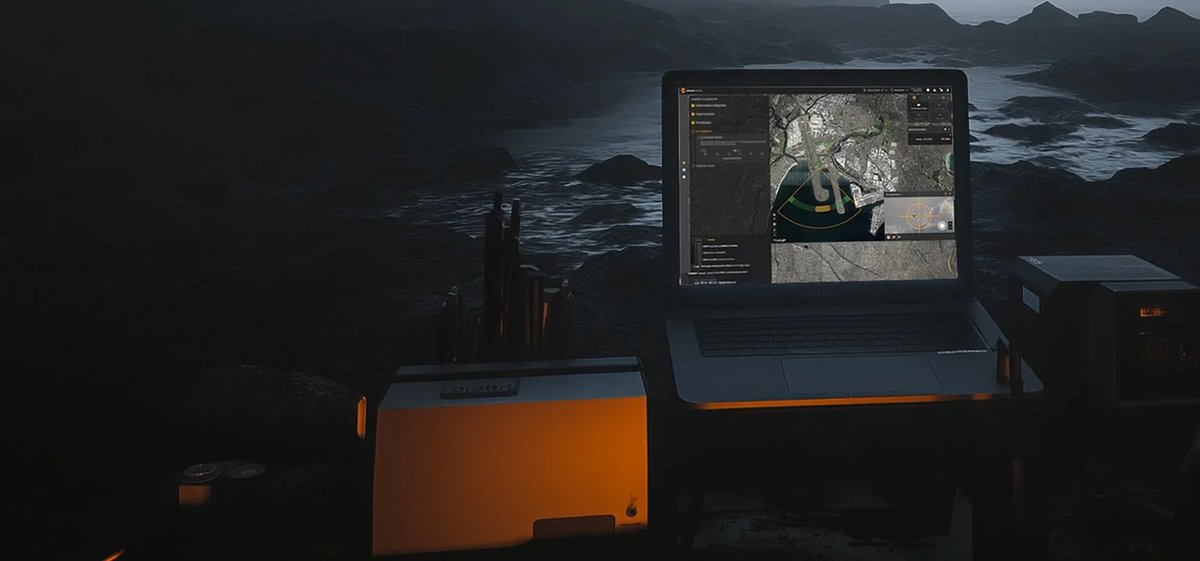
MIL-STD-810F qualification covers extreme temperatures, sand, salt-spray, and vibration, while IP66 marine-grade housing protects the electronics against the corrosive coastal environments found across the Gulf coastline, from the high-humidity Arabian Sea shore to the saline-saturated Arabian Gulf. At 40 W nominal power (standard transmitter) and a −32 °C to +65 °C operating range, the C400 runs continuously from shore power or a modest renewable supply. Integration with BlighterNexus software enables radar-camera fusion and multi-radar networking for comprehensive maritime domain awareness across large facilities or extended coastlines.
Technical specifications.
| Frequency band | Ku (15.7–17.2 GHz) |
| Waveform | FMCW Doppler e-scan (dual-beam) |
| Instrumented range (min) | <10 m |
| Detection: small wooden boat (RCS 1 m²) | 11.0 km / 5.9 NM |
| Detection: rigid inflatable (RCS 5 m²) | 16.0 km / 8.6 NM |
| Detection: small coaster (RCS 30 m²) | 20.0 km / 10.8 NM |
| Detection: large coaster (RCS 100 m²) | 25.0 km / 13.5 NM |
| Detection: container ship (RCS 1,000 m²) | 32.0 km / 17.3 NM |
| Min detectable radial velocity | 0 knots |
| Scan time (90°) | 1 s |
| Max targets per scan | 700 |
| False alarm rate | <1 per day |
| MTBF | >65,000 h |
| Coverage options | 90°, 180°, 360° |
| Data interface | 10/100 Ethernet + RS-232/RS-422 |
| Transmitter power | 1 W (standard) / 4 W (high-power) |
| Power consumption (standard) | 40 W |
| IP rating | IP66 |
| Environmental standard | MIL-STD-810F |
| Operating temperature | −32 to +65 °C |
| Main unit weight | ~25 kg |
| Auxiliary unit weight | ~21 kg |
| Dimensions (W×H×D) | 666 × 503 × 128 mm |
Use cases.
- ›Port and harbour perimeter protection against small vessel infiltration and smuggling
- ›Offshore oil and gas platform 360° maritime domain awareness
- ›Coastline border security monitoring for semi-submersibles and low-profile RIBs
- ›Estuarial and inland waterway critical infrastructure protection
- ›Maritime sabotage deterrence for energy export terminals and naval facilities
- ›Multi-radar networked coastal surveillance for extended Gulf shoreline coverage
Replacements & compatible alternatives.
Comparable Counter-UAS & Base Air Defence from other suppliers. Cross-shop on specs — confirm exact fit and compatibility with the supplier before specifying.