GP-Probe DIN L1
In-line DIN-rail GNSS interference detector that isolates receivers and time servers the moment spoofing or jamming is detected
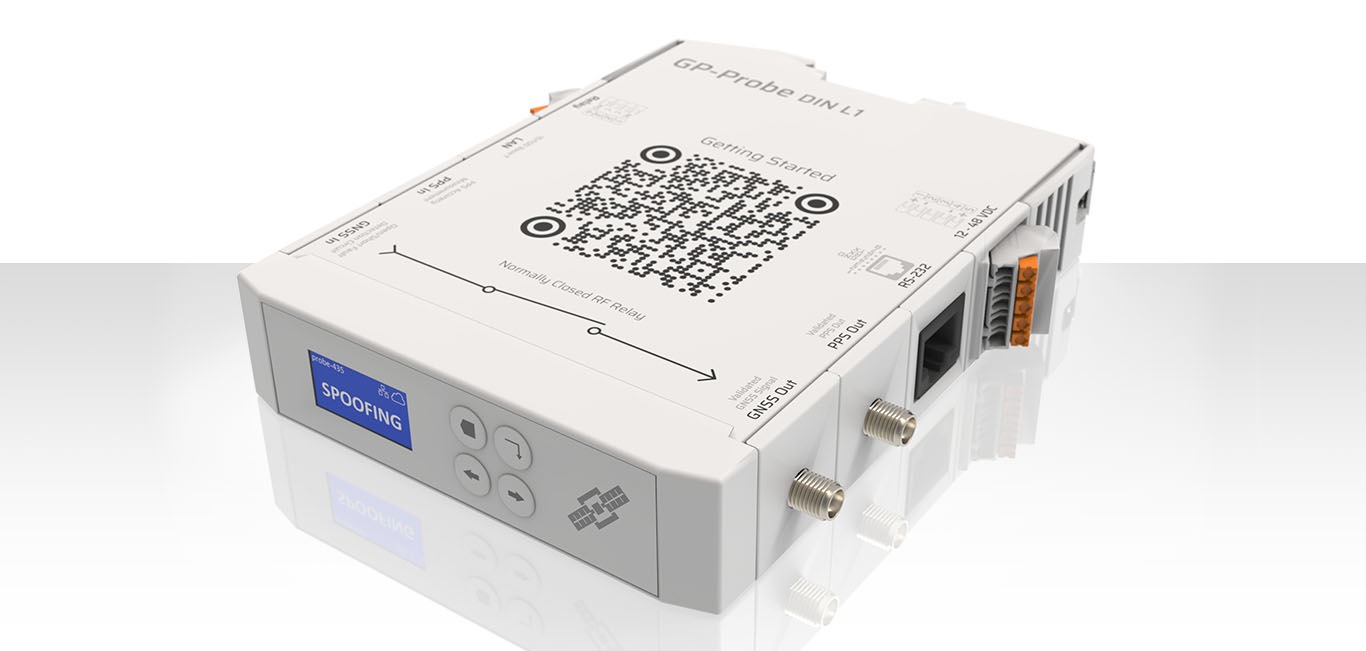
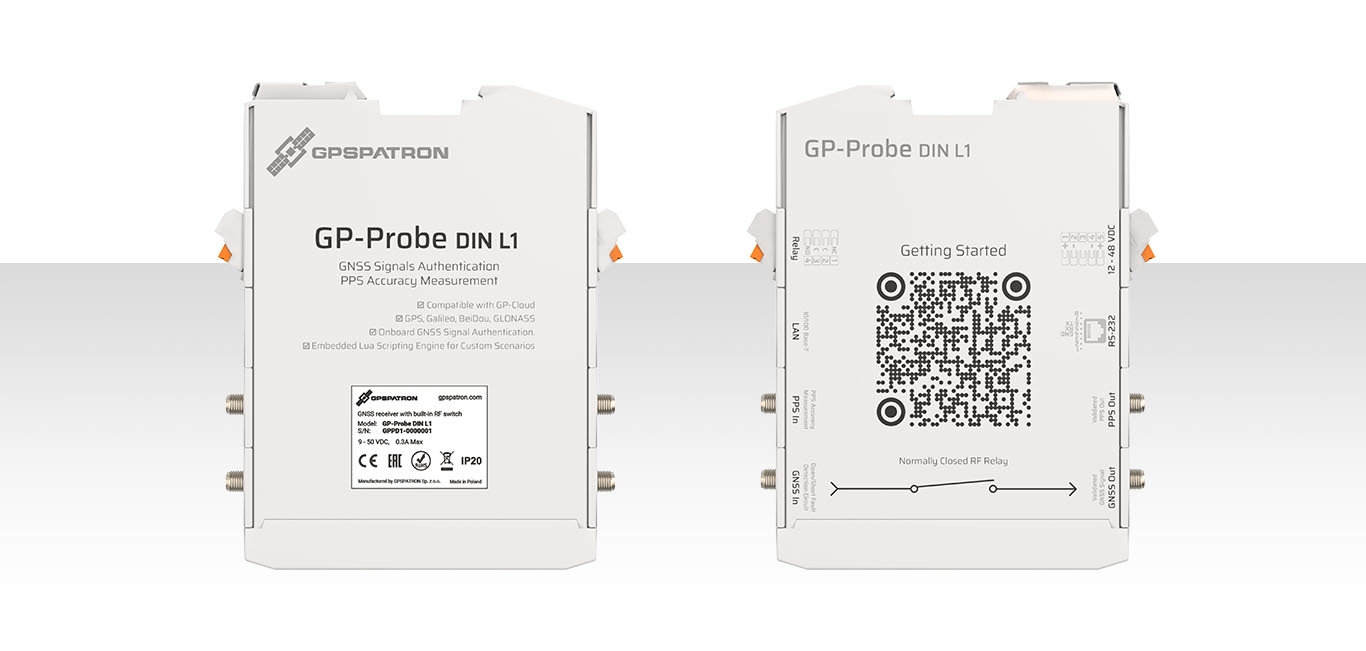
The GP-Probe DIN L1 is a cost-effective, DIN-rail-mounted GNSS probe designed to be installed in-line between a GNSS antenna and a receiver or time server. It covers three primary applications in one device: GNSS interference detection and classification, PPS accuracy monitoring, and GNSS signal quality analysis and logging. When an event is detected, the GNSS and PPS outputs are immediately disabled, preventing counterfeit signals from reaching protected systems; configurations with the BL option add an integrated RF switch with an embedded low-power jammer (−50 dBm RMS output, >60 dB channel isolation) that assures blocking of fake signals of any power during a spoofing attack.
The single RF channel monitors GPS L1 C/A, QZSS L1 C/A and L1S, GLONASS L1OF, BeiDou B1I/B1C, Galileo E1B/C and SBAS L1 C/A (WAAS, EGNOS, MSAS, GAGAN), with any combination of constellations traceable. It detects interference across a 60 MHz band as well as signal anomalies caused by asynchronous spoofing, high-power synchronous spoofing, and synchronous spoofing once parameter drift begins. A built-in PPS phase measurement unit compares a connected time server's PPS against the probe's reference and delivers real-time notification of accuracy degradation, while the validated PPS output holds < ±20 ns RMS to UTC(USNO) typical under clear sky.
With the Onboard Signal Processing (OSP) option, interference and anomaly detection runs standalone with no cloud connection; connected to GP-Cloud over HTTPS, fleets of probes are monitored centrally with alerting and long-term logging across an entire GNSS-dependent infrastructure. An embedded Lua scripting engine and debugger responds to events by controlling external equipment via RS-232, and a Form C relay output can trigger downstream systems. The STREAM option feeds raw and processed GNSS data via websocket into a customer's own detection systems.
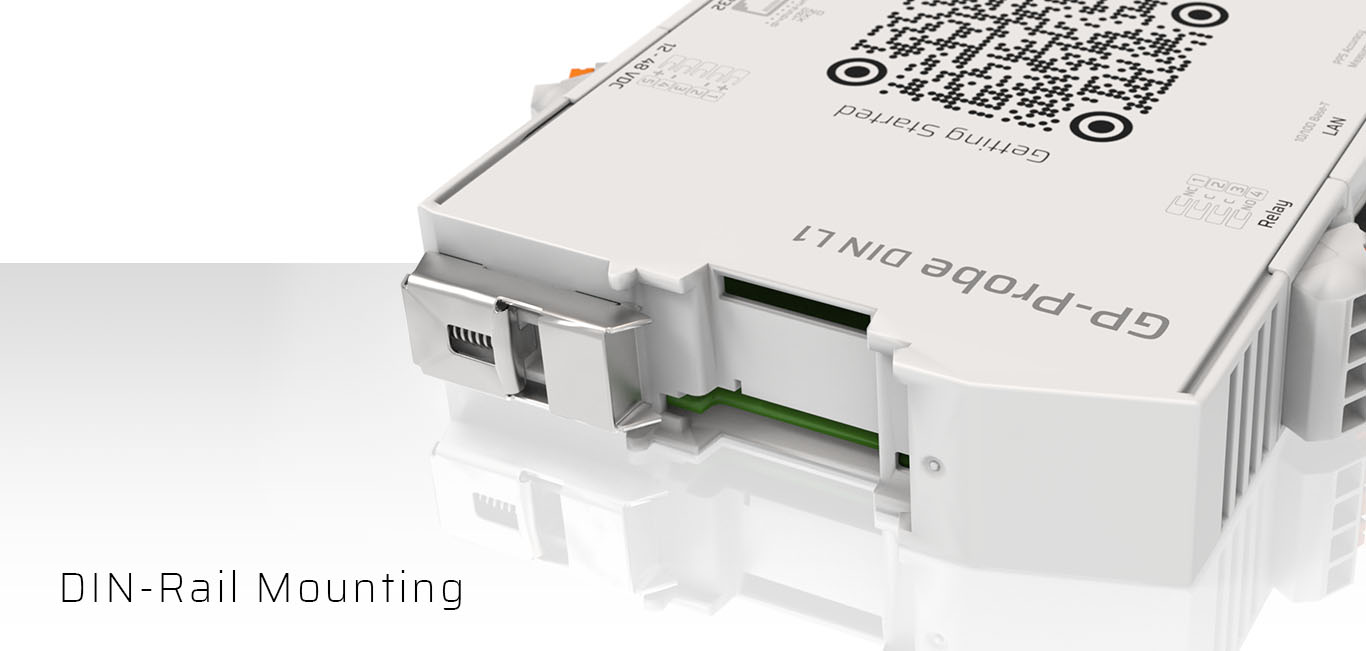
Running the FreeRTOS real-time operating system for high availability and cybersecurity, the probe consumes under 3.5 W from 12–48 VDC and mounts on a standard DIN rail (139.4 × 118 × 25 mm, 0.5 kg), with an optional adapter for 19-inch racks — a fit for distributed protection of GNSS-timed systems such as network time servers and synchronization chains at telecom and airport sites.
Technical specifications.
| GNSS signals monitored | GPS L1 C/A; QZSS L1 C/A, L1S; GLONASS L1OF; BeiDou B1I/B1C; Galileo E1B/C; SBAS L1 C/A (WAAS, EGNOS, MSAS, GAGAN) |
| Traceable GNSS | Any combination of constellations |
| GNSS RF channels | 1 (interference/anomaly detection and signal quality analysis) |
| Detected threat types | Interference in 60 MHz band; anomalies from asynchronous spoofing, high-power synchronous spoofing, and synchronous spoofing after parameter drift begins |
| RF spectrum monitoring | 65 MHz basic RF spectrum monitoring feature |
| Threat response | GNSS and PPS outputs disabled on detection; embedded jammer (BL option) blocks fake signals of any power |
| Isolation level, closed channel | > 60 dB |
| Operating system | FreeRTOS real-time OS |
| ESD protection | ±15 kV air discharge (IEC 61000-4-2) on RF, PPS and serial ports |
| Embedded GNSS jammer output power | −50 dBm RMS |
| PPS output accuracy (clear sky) | < ±20 ns RMS to UTC(USNO), typical |
| PPS input | SMA(F), 50 Ω TTL-compliant, 1.3–5.5 V |
| GNSS antenna input | SMA(F), 50 Ω, 3.3 VDC bias, 50 mA max, short-circuit and disconnected-antenna fault detection |
| Network interface | 10/100BASE-T RJ45; HTTPS to GP-Cloud; IPv4/DHCP |
| Serial interface | RS-232 HOST port for external equipment control (Lua scripting) |
| Relay output | 1 Form C (SPDT), 2 A, 60 W/125 VA, 220 VDC/250 VAC |
| Power supply | 12–48 VDC |
| Power consumption | < 3.5 W |
| Housing | DIN rail housing, polyamide with metal foot catch |
| Operating temperature | −20 to +50 °C |
| Humidity | 0–90% RH non-condensing @ 40 °C |
| Mounting | DIN rail; optional adapter for 19-inch racks |
| Dimensions | 139.4 × 118 × 25 mm |
| Weight | 0.5 kg |
| Warranty | 1 year (extended available), 1 year complimentary support |
Available variants.
Certifications.
Use cases.
- ›GNSS timing protection for telecom and airport infrastructure
- ›PPS accuracy monitoring of time servers
- ›in-line GNSS receiver spoofing protection
- ›distributed GNSS interference monitoring networks
Replacements & compatible alternatives.
Comparable Air Traffic Control & Navigation Aids from other suppliers. Cross-shop on specs — confirm exact fit and compatibility with the supplier before specifying.