
Side-by-side
UW6000 Carbon Fiber Full-duplex Cordless Headset vs Premier TT4000
Spec comparison for two products on Aviation Souk. Both compete in Ground Support Equipment (GSE).
Ground Support Equipment (GSE)
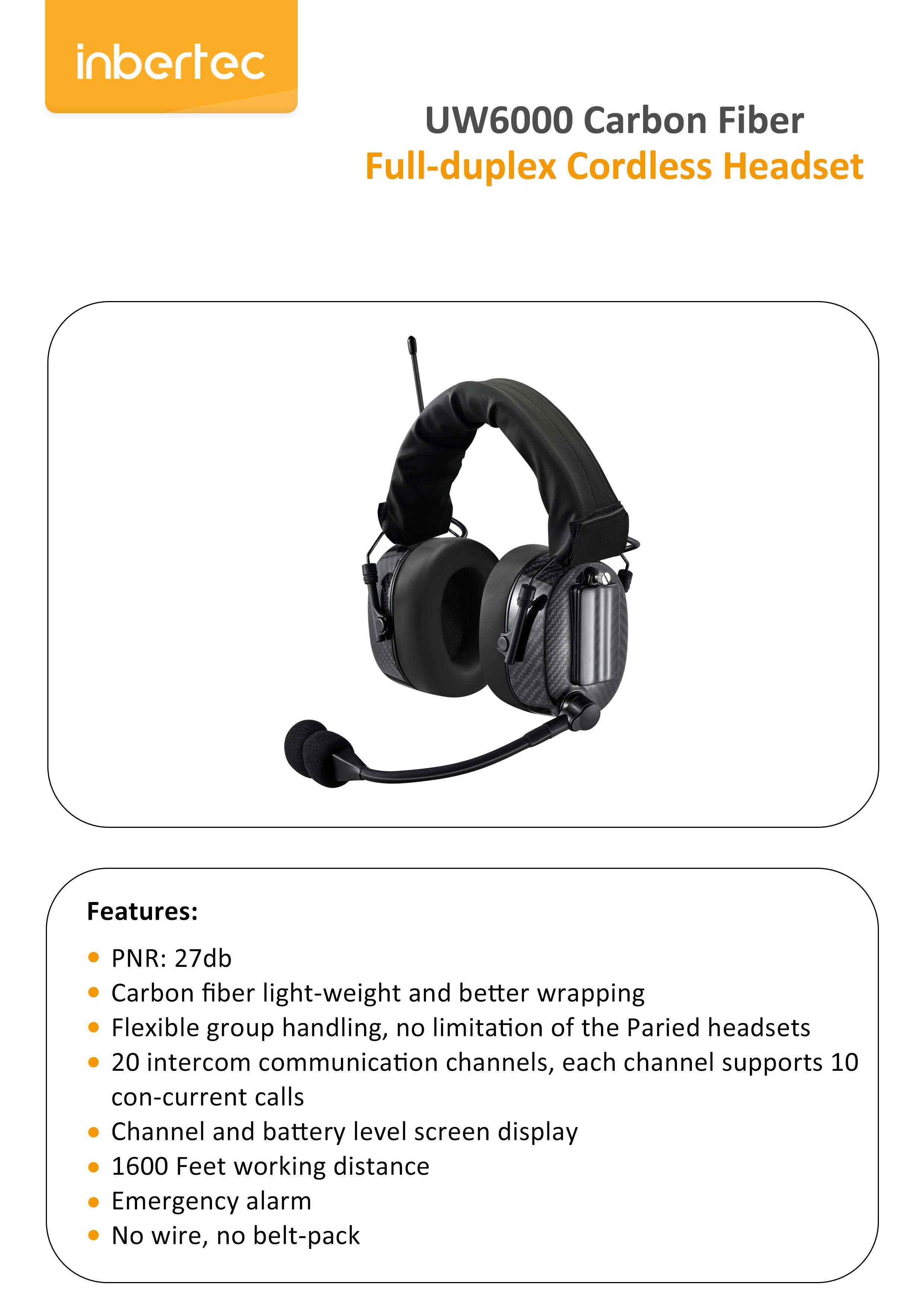
UW6000 Carbon Fiber Full-duplex Cordless Headset
by Inbertec
Lightweight carbon-fibre full-duplex wireless headset for ramp and MRO teams

Ground Support Equipment (GSE)
Premier TT4000
by Textron GSE
A 4,000-gallon de/anti-ice tanker truck capable of refilling up to three deicers in a single dispatch.
| Cost of ownership | UW6000 Carbon Fiber Full-duplex Cordless Headset | Premier TT4000 |
|---|---|---|
| Price tier | — | — |
| Lead time (weeks) | ?–? | ?–? |
| Delivery | — | — |
| Install | — | — |
| GCC airports deployed | 0 | 0 |
| Certifications | 0 | 0 |
Specs
Technical specifications.
| Spec | UW6000 Carbon Fiber Full-duplex Cordless Headset | Premier TT4000 |
|---|---|---|
| Model | UW6000 | — |
| Type | Carbon fibre full-duplex cordless headset | — |
| Passive noise reduction (PNR) | 27 dB | — |
| Shell | Carbon fibre light-weight | — |
| Working distance | 1600 ft (~488 m) | — |
| Intercom channels | 20 | — |
| Concurrent talkers per channel | up to 10 | — |
| Belt pack | None — no wire, no belt pack | — |
| Display | Channel and battery level screen | — |
| Emergency alarm | Yes | — |
| Cross-series compatibility | UW2000 series | — |
| Provenance | Inbertec GSE wireless catalogue (RFQ f9cfd705) | — |
| Total Fluid Capacity | — | 4,000 gal |
| De-icing Tank Capacity | — | 2 × 1,500 gal (5,678 L each) |
| Anti-icing Tank Capacity | — | 1,000 gal (3,785 L) |
| Tank Material | — | 12-gauge A304 stainless steel |
| De-icing Pump Flow Rate | — | 200 gal/min at 25 PSI |
| Anti-icing Pump Flow Rate | — | 75 gal/min |
| Hose Reels | — | Dual 25 ft, 12V electric retraction |
| Single Deicer Refill Time | — | ~10 minutes |
Decide
Ask Aviation Souk to pick for your tender.
The AI weighs both products against your specific brief — airport, certifications, lead time, budget — and tells you which fits.
Ask the AI →