
Side-by-side
RaySense AI DAS Fiber Optic Fence Security System vs GS-20 Underground Sensor
Spec comparison for two products on Aviation Souk. Both compete in perimeter-security.
perimeter-security
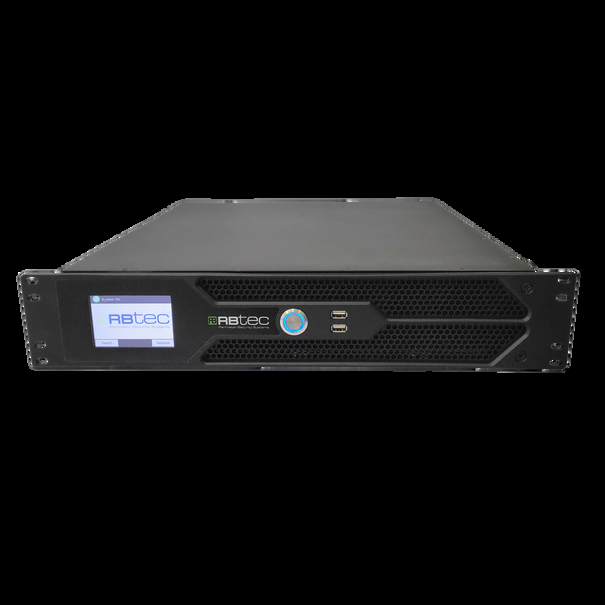
RaySense AI DAS Fiber Optic Fence Security System
by rbtec
AI-classified fiber-optic acoustic sensing for fence perimeters up to 100 km from one controller.
perimeter-security
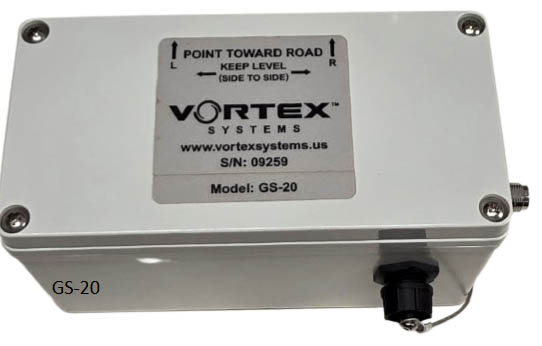
GS-20 Underground Sensor
by vortex-systems
Buried seismic and magnetometer intrusion sensor with 5-Watt VHF reporting up to 35 miles line-of-sight
| Cost of ownership | RaySense AI DAS Fiber Optic Fence Security System | GS-20 Underground Sensor |
|---|---|---|
| Price tier | — | — |
| Lead time (weeks) | ?–? | ?–? |
| Delivery | — | — |
| Install | — | — |
| GCC airports deployed | 0 | 0 |
| Certifications | 3 | 0 |
Specs
Technical specifications.
| Spec | RaySense AI DAS Fiber Optic Fence Security System | GS-20 Underground Sensor |
|---|---|---|
| Detection principle | Distributed Acoustic Sensing (DAS) via Coherent Optical Time Domain Reflectometer (COTDR) on standard single-mode fiber | — |
| Deployment | Fence-mounted; hybrid system — same cable can be used on the fence and underground | Buried (antenna only above ground) or above-ground |
| Detection distance | 1-100 km (1-60 mi) per processing unit; up to 50 km (31 mi) in straight-line configuration | — |
| Recommended perimeter length | 3 km (1.9 mi) and above | — |
| Localisation resolution | 3 m (10 ft) between detection points along the sensing fiber | — |
| Simultaneous event separation | 40 m (130 ft) minimum cable separation between individually reported disturbances | — |
| Cut resilience | Detects to within 10 m (30 ft) of a fiber cut; within 10 m on either side of the cut in redundant loop configuration | — |
| Channels | 1- or 2-channel unit; two fiber channels of simultaneous real-time independent detection per device | — |
| Event classification | AI signature-based detection-by-classification; deep-learning algorithms (150,000+ training records per OEM page), separate algorithm sets for fence and buried; offline AI, no monthly fee | — |
| Nuisance alarm handling | Detection parameters adjustable by location | — |
| Zones | Software-configurable independent sensor sections | — |
| Sensor cable | Standard single-mode fiber optic cable; maximum fiber loss 12 dB; no field power or electronics | — |
| System interface | Web 2.0; IP-based remote control and monitoring | — |
| Integration | TCP/IP (Ethernet); relay closures via connected PLC or ADAM module | — |
| Ports | 2x FC/APC single-mode optical connectors, 1x USB2, 1x Ethernet 10/100/1000 Mbps | — |
| Power supply | 110-240 VAC, 47-63 Hz, auto-ranging | — |
| Power consumption | 85 W typical, 125 W max | — |
| Form factor | 19 in / 2U rack; 49 x 50 x 8.9 cm; 8 kg | — |
| Controller operating temperature | 0-40°C (32-104°F), air-conditioned environment | — |
| Operating life | >10 years (dependent on environment and regular maintenance) | — |
| MTBF | 80,000 hours | — |
| Laser safety | Class 1 (IEC 60825-1, 21CFR1040.10); key-switch shutoff on front panel | — |
| Certification | CE — EMC Directive 2014/30/EU (EN 55032:2015 Class A et al.) + Low Voltage Directive 2014/35/EU (IEC 62368-1:2018); ISO 9001 accredited design and manufacturing | — |
| Warranty | 2 years, optional per-year extension | — |
| Sensing modalities | — | Internal seismic (pedestrian) + internal magnetometer (vehicle presence and travel direction) |
| External sensor inputs | — | PIR and contact-closure via configurable external connector |
| Sensor fusion | — | Up to 5 sensors |
| Radio | — | Built-in 5 W VHF, programmable RF output power, strong foliage penetration |
| Radio range | — | Up to 35 miles line-of-sight |
| Alarm codes | — | Up to 15 unique |
| Sensor address range | — | 1-9999 |
| Power | — | 8-20 VDC |
| Battery life | — | 1+ year (deployment 3 months to 1 year or longer depending on configuration) |
| Dimensions | — | 6.5 x 3 x 3 in |
| Enclosure | — | Watertight, corrosion-proof fiberglass-reinforced polyester with silicone foam gasket |
| Output | — | Mechanical relay to trigger external devices (cameras, lights, sirens) |
| Security | — | Internal tamper switch |
| Timing | — | Real-time clock; programmable self-test messages and scheduled access windows |
| Networking | — | Stand-alone or networked; Coyote/Cub relay mode; compatible with legacy Vortex and Monitron systems |
Decide
Ask Aviation Souk to pick for your tender.
The AI weighs both products against your specific brief — airport, certifications, lead time, budget — and tells you which fits.
Ask the AI →