
Side-by-side
Seismo Unattended Ground Sensor (UGS) Security System vs GS-20 Underground Sensor
Spec comparison for two products on Aviation Souk. Both compete in perimeter-security.
perimeter-security
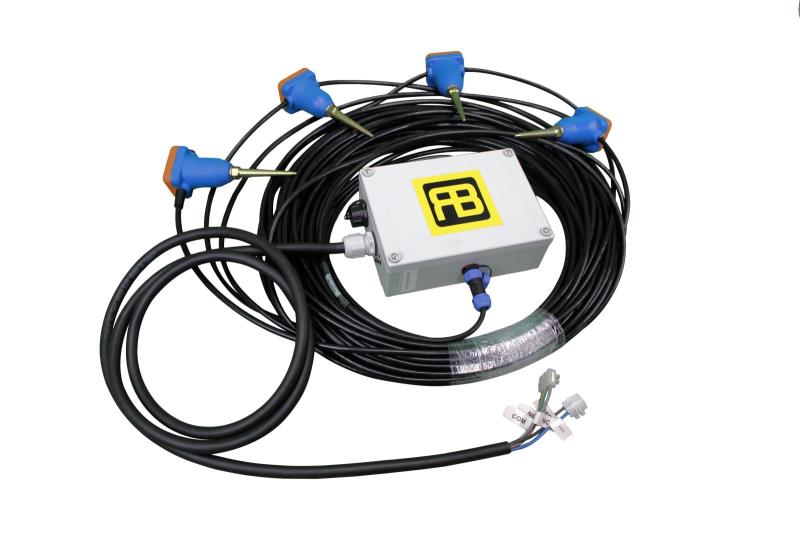
Seismo Unattended Ground Sensor (UGS) Security System
by rbtec
Buried seismic geophone strings with AI classification of footsteps versus vehicles — invisible, unsabotageable.
perimeter-security
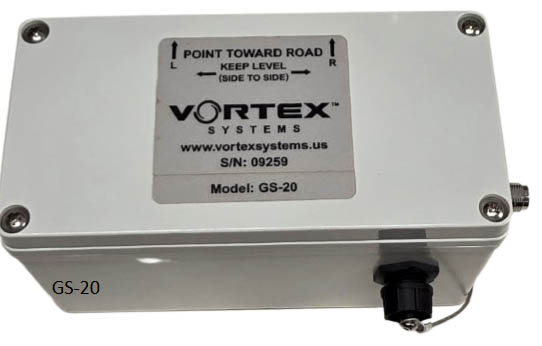
GS-20 Underground Sensor
by vortex-systems
Buried seismic and magnetometer intrusion sensor with 5-Watt VHF reporting up to 35 miles line-of-sight
| Cost of ownership | Seismo Unattended Ground Sensor (UGS) Security System | GS-20 Underground Sensor |
|---|---|---|
| Price tier | — | — |
| Lead time (weeks) | ?–? | ?–? |
| Delivery | — | — |
| Install | — | — |
| GCC airports deployed | 0 | 0 |
| Certifications | 0 | 0 |
Specs
Technical specifications.
| Spec | Seismo Unattended Ground Sensor (UGS) Security System | GS-20 Underground Sensor |
|---|---|---|
| Detection principle | Buried seismic geophone sensing units with real-time AI classification; designed to pick up only security-related vibrations — does not sense earthquakes | — |
| Detection pattern per sensor | Circular (360°), up to 10 m (33 ft) diameter | — |
| Sensors per system | 4 or 8 geophone sensing units + analyzer | — |
| Sensor spacing | 6-10 m (20-32 ft), pre-installed on the cable | — |
| Coverage per system | Up to 80 m (250 ft) | — |
| Detection coverage | 4-sensor system: 4x 10 m diameter; 8-sensor system: 8x 10 m diameter | — |
| Installation layouts | Line (up to ~40 m / 130 ft run) or square (~22-40 m / 80-130 ft) configurations | — |
| Event classification | Steps / vehicle, with configurable sensitivity level per threat type | — |
| Sensitivity | Set and registered per sensor | — |
| Calibration | Machine-learning algorithm continuously auto-calibrates to environmental influences; included calibration software (Windows PC, Ethernet needed for configuration only) | — |
| Versions | Standalone or IP network | — |
| Outputs | Dry-contact relays, N.O./N.C.; optional wireless | — |
| Integration | Any existing security system, burglar alarm or CCTV via dry contact / DC relay | — |
| Power supply | 12-48 VDC | — |
| Current draw | 500 mA @ 12 V | — |
| Sensor ingress protection | IP68 | — |
| Operating temperature | -30°C to +70°C (-22°F to +158°F) | — |
| Environmental immunity | Resistant to extreme weather and temperature changes; no interference from vegetation or strong winds; works in a large variety of terrains, in any ground, without preparation | — |
| Installation | Plug & play, installation in minutes; no training or special tools; designed to work without maintenance | — |
| Sensing modalities | — | Internal seismic (pedestrian) + internal magnetometer (vehicle presence and travel direction) |
| External sensor inputs | — | PIR and contact-closure via configurable external connector |
| Sensor fusion | — | Up to 5 sensors |
| Radio | — | Built-in 5 W VHF, programmable RF output power, strong foliage penetration |
| Radio range | — | Up to 35 miles line-of-sight |
| Alarm codes | — | Up to 15 unique |
| Sensor address range | — | 1-9999 |
| Power | — | 8-20 VDC |
| Battery life | — | 1+ year (deployment 3 months to 1 year or longer depending on configuration) |
| Dimensions | — | 6.5 x 3 x 3 in |
| Enclosure | — | Watertight, corrosion-proof fiberglass-reinforced polyester with silicone foam gasket |
| Deployment | — | Buried (antenna only above ground) or above-ground |
| Output | — | Mechanical relay to trigger external devices (cameras, lights, sirens) |
| Security | — | Internal tamper switch |
| Timing | — | Real-time clock; programmable self-test messages and scheduled access windows |
| Networking | — | Stand-alone or networked; Coyote/Cub relay mode; compatible with legacy Vortex and Monitron systems |
Decide
Ask Aviation Souk to pick for your tender.
The AI weighs both products against your specific brief — airport, certifications, lead time, budget — and tells you which fits.
Ask the AI →