
Side-by-side
Senstar LM100 vs GS-20 Underground Sensor
Spec comparison for two products on Aviation Souk. Both compete in perimeter-security.
perimeter-security
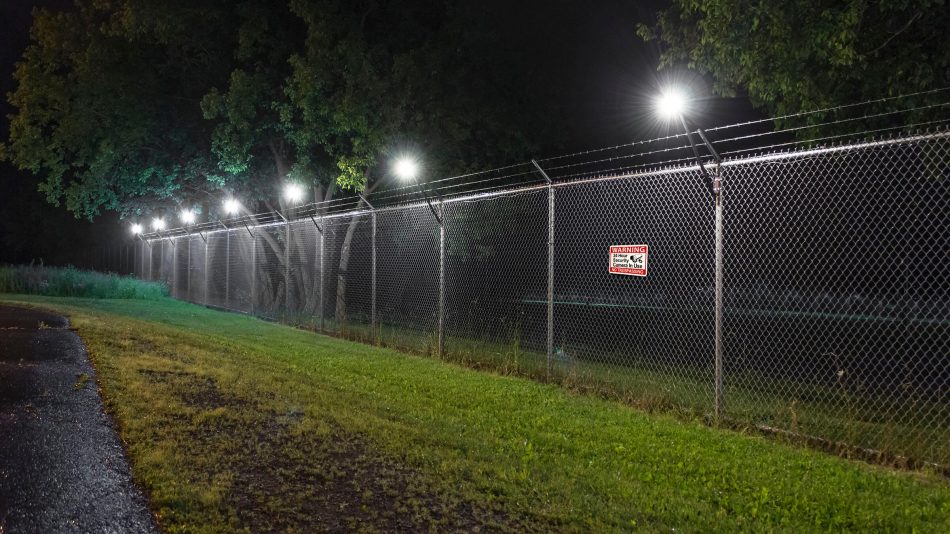
Senstar LM100
by Senstar Technologies
Hybrid perimeter intrusion detection and deterrence - accelerometer sensing plus intelligent LED lighting in one fence-mounted unit
perimeter-security
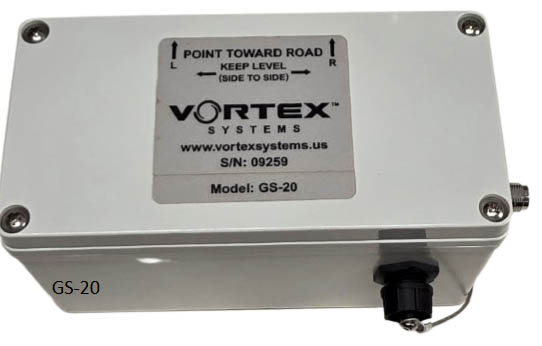
GS-20 Underground Sensor
by vortex-systems
Buried seismic and magnetometer intrusion sensor with 5-Watt VHF reporting up to 35 miles line-of-sight
| Cost of ownership | Senstar LM100 | GS-20 Underground Sensor |
|---|---|---|
| Price tier | — | — |
| Lead time (weeks) | ?–? | ?–? |
| Delivery | — | — |
| Install | — | — |
| GCC airports deployed | 0 | 0 |
| Certifications | 5 | 0 |
Specs
Technical specifications.
| Spec | Senstar LM100 | GS-20 Underground Sensor |
|---|---|---|
| System type | Combined fence-mounted intrusion detection (accelerometer) and LED security lighting - 2-in-1 luminaire | — |
| Detection | Built-in accelerometer per luminaire detects cut, climb and lift attempts; intrusions located to the nearest luminaire; EDAPT adaptive processing | — |
| Deterrence | Instant-on or strobe lighting at the intrusion location; can trigger warnings, alarms and camera cueing | — |
| Brightness | 53 lux per luminaire (163 total lumens), 120-degree coverage pattern, CRI greater than 70 full-spectrum light | — |
| Luminaire spacing | 3 to 6 m (10 to 20 ft) apart for optimal coverage; supports any fence height | — |
| LED life expectancy | 50,000+ hours minimum (15+ years at 9 h/day retaining over 70% brightness) | — |
| Power consumption | 2.5 W per luminaire; up to 95% reduction vs conventional perimeter lighting; gateway 0.5 W base / 1.0 W with comms card | — |
| Input power | 12 to 48 VDC (24 VDC or higher for multiple luminaires); 14 or 16 AWG 2-wire; integrated surge protection | — |
| Luminaires per gateway | up to 100 | — |
| Communications (luminaires) | Encrypted 2.4 GHz, 128-bit AES self-healing wireless mesh between luminaires; luminaire AP to gateway via RS-485 (2-wire); single low-voltage power wire along fence | — |
| Operating temperature | -40 to +70 deg C | — |
| Humidity | 100% condensing (luminaire and gateway) | — |
| Luminaire housing | Rugged UV-rated ASA and polycarbonate, NEMA Type 3S; welded aluminum mounting arm, black polyester powder finish; worm-gear clamps to fence posts, flanges for walls | — |
| Luminaire dimensions / weight | 98.4 x 14.3 x 5.1 cm / 740 g | — |
| Gateway enclosure | Rugged all-weather aluminum UL NEMA Type 4X, hinged locking cover, gray polyester powder finish, 5 compression-gland cable entries, external ground lug | — |
| Gateway dimensions / weight | 31.6 x 19.0 x 9.0 cm / 1.2 kg | — |
| Gateway I/O | 10 individually programmable I/O ports (light control inputs or assignable relay functions: alarm, supervision, door tamper, power fail, fail-safe; 100 mA power for external devices); optional 4-port relay-output or dry-contact-input cards; USB configuration port; alarm queuing on network loss | — |
| Gateway network connectivity | Ethernet 10/100BASE-TX with PoE (card powers gateway), RS-422, multi-mode fiber (up to 2.2 km, 820 nm ST) or single-mode fiber (up to 10 km, 1310 nm ST); Silver Network shared with other Senstar sensors | — |
| Configuration | Windows-based UCM via USB or network: illumination schedule/intensity/zones/duration/strobe, detection fence type/gain/filter/disturbance count, supervision and tamper alarm, real-time graphical plot | — |
| Light pollution control | Downward-directed 120-degree coverage; warm-white low-CCT option certified by the International Dark-Sky Association (IDA) | — |
| Integration | Network Manager to Senstar or third-party SMS; direct alarm-panel interface via I/O in non-networked sites; same network as FlexZone, OmniTrax, UltraLink, UltraWave | — |
| Sensing modalities | — | Internal seismic (pedestrian) + internal magnetometer (vehicle presence and travel direction) |
| External sensor inputs | — | PIR and contact-closure via configurable external connector |
| Sensor fusion | — | Up to 5 sensors |
| Radio | — | Built-in 5 W VHF, programmable RF output power, strong foliage penetration |
| Radio range | — | Up to 35 miles line-of-sight |
| Alarm codes | — | Up to 15 unique |
| Sensor address range | — | 1-9999 |
| Power | — | 8-20 VDC |
| Battery life | — | 1+ year (deployment 3 months to 1 year or longer depending on configuration) |
| Dimensions | — | 6.5 x 3 x 3 in |
| Enclosure | — | Watertight, corrosion-proof fiberglass-reinforced polyester with silicone foam gasket |
| Deployment | — | Buried (antenna only above ground) or above-ground |
| Output | — | Mechanical relay to trigger external devices (cameras, lights, sirens) |
| Security | — | Internal tamper switch |
| Timing | — | Real-time clock; programmable self-test messages and scheduled access windows |
| Networking | — | Stand-alone or networked; Coyote/Cub relay mode; compatible with legacy Vortex and Monitron systems |
Decide
Ask Aviation Souk to pick for your tender.
The AI weighs both products against your specific brief — airport, certifications, lead time, budget — and tells you which fits.
Ask the AI →