
Side-by-side
Senstar UltraWave vs GS-20 Underground Sensor
Spec comparison for two products on Aviation Souk. Both compete in perimeter-security.
perimeter-security
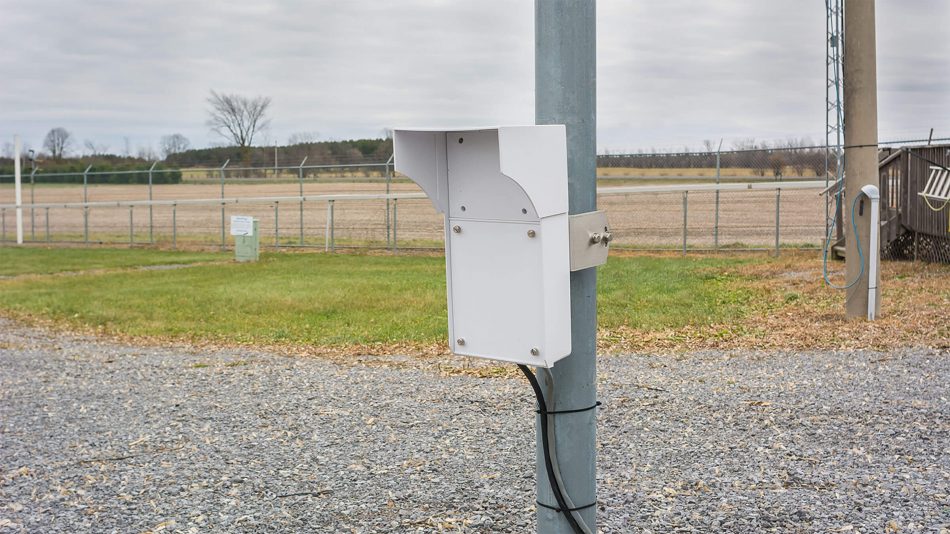
Senstar UltraWave
by Senstar Technologies
Digital bistatic K-band microwave sensor - stackable 5-200 m volumetric detection zones for gates and perimeter gap-fill
perimeter-security
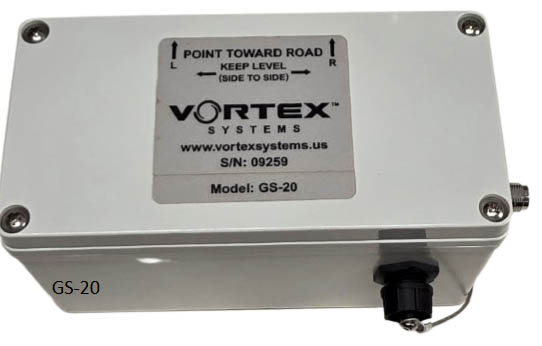
GS-20 Underground Sensor
by vortex-systems
Buried seismic and magnetometer intrusion sensor with 5-Watt VHF reporting up to 35 miles line-of-sight
| Cost of ownership | Senstar UltraWave | GS-20 Underground Sensor |
|---|---|---|
| Price tier | — | — |
| Lead time (weeks) | ?–? | ?–? |
| Delivery | — | — |
| Install | — | — |
| GCC airports deployed | 0 | 0 |
| Certifications | 1 | 0 |
Specs
Technical specifications.
| Spec | Senstar UltraWave | GS-20 Underground Sensor |
|---|---|---|
| Sensor type | Volumetric, fully digital bistatic microwave (paired transmitter and receiver, post- or wall-mounted, cylindrical detection zone) | — |
| Detection range | Walking target 5-200 m; crawling target 5-150 m; commando roll 5-100 m | — |
| Detection rate | Greater than 99% when properly installed | — |
| Operating frequency | 24.075-24.175 GHz band, 10 field-selectable channels, 24 dBm output (FCC); or 24.150-24.250 GHz harmonized band, 10 channels, 20 dBm output (ETSI/CE) | — |
| Signal processing | All-digital DSP discriminates intruder signatures (walking, running, crawling) from environmental effects; Automatic Gain Control compensates for Tx-Rx separation, conditions and weather; PLL-controlled VCO for ultra-stable frequency | — |
| Anti-spoofing | Receiver recognises only its paired transmitter; signal loss and jamming attempts reported; Tx-Rx communication via modulation of the microwave signal gives full transmitter supervision with no data wiring to the transmitter | — |
| Stackable | Yes - multiple Tx/Rx pairs stack on a common post to increase detection zone height; 10 channels allow adjacent/overlapping zones without interference | — |
| Clear zone requirement | Total width 4% of Tx-Rx separation, free of tall grass, vegetation and obstacles | — |
| Operating temperature | -40 to +70 deg C | — |
| Humidity | 0 to 95% non-condensing; conformal coated PCBs | — |
| Ingress rating | IP65 | — |
| Power | Transmitter 1.5 W; receiver with communications card 2.6 W; 12 to 48 VDC; PoE via optional Ethernet card; Tranzorb and gas-discharge protection on all I/O including power | 8-20 VDC |
| Unit dimensions / weight | 31 x 16 x 8 cm / 0.9 kg each (Tx and Rx); 3.63 kg shipping weight per pair; high-impact ABS housing, marine white | — |
| Mounting | Pole-mount kit for posts 4.8-11.4 cm diameter included; wall mounting supported; two cable ports with glands, fits 13 mm conduit | — |
| On-board I/O | 4 Form C relay outputs (2 per Tx and Rx), 1.0 A at 30 VDC, assignable (alarm, tamper, power fail, fail-safe), activation programmable 0.125-10 s; auxiliary input on Rx | — |
| Communications | Optional cards: EIA-422 (up to 1.2 km), multi-mode fiber (up to 2.2 km, 820 nm ST), single-mode fiber (up to 10 km, 1310 nm ST), Ethernet 10/100BASE-TX with PoE; Silver Network shared with OmniTrax, FlexZone and XField; Crossfire network backward-compatible with MPS-4100; dual-end polled redundant data paths | — |
| Configuration | Windows-based UCM via USB or network; calculates optimum mounting height from Tx-Rx separation and stacking configuration; remote diagnostics over sensor network | — |
| Integration | Network Manager Service to Senstar StarNet 2 or third-party SMS | — |
| Sensing modalities | — | Internal seismic (pedestrian) + internal magnetometer (vehicle presence and travel direction) |
| External sensor inputs | — | PIR and contact-closure via configurable external connector |
| Sensor fusion | — | Up to 5 sensors |
| Radio | — | Built-in 5 W VHF, programmable RF output power, strong foliage penetration |
| Radio range | — | Up to 35 miles line-of-sight |
| Alarm codes | — | Up to 15 unique |
| Sensor address range | — | 1-9999 |
| Battery life | — | 1+ year (deployment 3 months to 1 year or longer depending on configuration) |
| Dimensions | — | 6.5 x 3 x 3 in |
| Enclosure | — | Watertight, corrosion-proof fiberglass-reinforced polyester with silicone foam gasket |
| Deployment | — | Buried (antenna only above ground) or above-ground |
| Output | — | Mechanical relay to trigger external devices (cameras, lights, sirens) |
| Security | — | Internal tamper switch |
| Timing | — | Real-time clock; programmable self-test messages and scheduled access windows |
| Networking | — | Stand-alone or networked; Coyote/Cub relay mode; compatible with legacy Vortex and Monitron systems |
Decide
Ask Aviation Souk to pick for your tender.
The AI weighs both products against your specific brief — airport, certifications, lead time, budget — and tells you which fits.
Ask the AI →