
TrueView R40 / R30 / R20 Radar
A scalable family of AESA radars — from a 1.3 kg airborne unit to a high-power ground installation — delivering AI-edge drone detection, tracking, and classification across the full counter-UAS sensor stack.
The TrueView radar family spans three hardware tiers — R20, R30, and R40 — sharing a common AESA architecture, AI-at-the-edge processing, and STAP (Space-Time Adaptive Processing) algorithms, but optimised for fundamentally different deployment contexts.
The R20 is the smallest unit in the class with true AESA technology: 206 mm long, 1.3 kg, drawing 38 W from an 18–36 VDC supply. Its air-to-air capability makes it the standard fit for the DroneHunter F700 interceptor, and its ground-to-air mode tracks small multi-rotor UAS (DJI Phantom-class) to 0.75–1.0 km and larger multi-rotors to 1.3 km. Field of view is 120° azimuth × 60° elevation. This is the right choice where SWaP-C dominates: vehicle mounts, pole-top installs, or airborne ISR.
The R30 steps up to a 429 × 281 × 96 mm enclosure at 7.1 kg, consuming 140 W. It adds a second elevation scan plane (120° × 120° FoV), 16 receive channels versus 4, and a 1-teraflop onboard NVIDIA GPU for microdoppler AI classification. Tracking ranges extend to 2.0–2.5 km for small multi-rotors and 3.5 km for larger platforms; manned aircraft (Cessna-class) are tracked to 8 km. Four networked R30 units achieve full 360° perimeter coverage — the standard configuration for airport and stadium installations.
The R40 is Fortem's highest-performance ground-based unit, sharing the 256-element, 16-channel AESA architecture of the R30 but fitted with a 5.5-teraflop GPU — a 5× processing uplift — for faster, more accurate edge classification at extended range and in high-clutter urban or coastal environments. Published R40 hardware dimensions and power draw are available on request from Fortem directly.
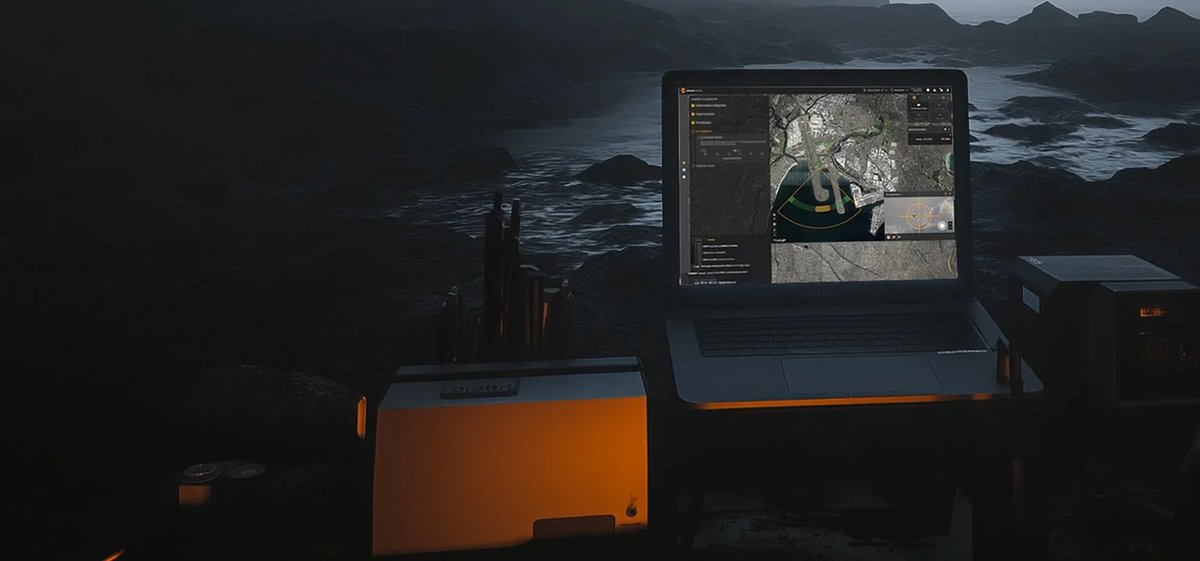
All three models operate in the 15.4–16.7 GHz band, share the same JSON/Ethernet output protocol, and integrate natively with SkyDome Manager. In GCC airport and defence contexts, the R30 and R40 are the primary ground-based sensors; the R20 pairs with the DroneHunter to give the interceptor its own independent radar picture in all weather.
Technical specifications.
| R20 radar frequency | 15.4–16.7 GHz |
| R20 field of view | 120° azimuth × 60° elevation |
| R20 tracking range (small multi-rotor) | 0.75–1.0 km |
| R20 tracking range (large multi-rotor) | 1.3 km |
| R20 receive channels | 4 |
| R30 radar frequency | 15.4–16.6 GHz |
| R30 field of view | 120° azimuth × 120° elevation |
| R30 tracking range (small multi-rotor) | 2.0–2.5 km |
| R30 tracking range (large multi-rotor) | 3.5 km |
| R30 tracking range (manned aircraft) | 8 km |
| R30 instrumented range | 1–16 km |
| R30 receive channels | 16 |
| R40 AESA elements | 256 receive elements, 16 digital channels |
| Minimum target radial velocity (all models) | 0.15 m/s or less (configurable) |
| Angular accuracy (R30) | ±1° azimuth, ±1° elevation |
| Angular accuracy (R20) | ±2° azimuth, ±2° elevation |
| R20 input power | 38 W (18–36 VDC) |
| R30 input power | 140 W (18–36 VDC) |
| R20 processing power | 1 teraflop |
| R20 operating temperature | -40 °C to +55 °C |
| R30 processing power | 1 teraflop |
| R30 operating temperature | -40 °C to +55 °C |
| R40 GPU processing power | 5.5 teraflops |
| R20 dimensions | 206 × 81 × 86 mm |
| R20 weight | 1.3 kg |
| R30 dimensions | 429 × 281 × 96 mm |
| R30 weight | 7.1 kg |
Use cases.
- ›R20: onboard radar for the DroneHunter F700 interceptor, providing air-to-air target lock in all weather
- ›R20: low-SWaP pole or vehicle mount for perimeter early warning at smaller aerodromes, helipads, and forward bases
- ›R30: primary ground sensor for airport perimeter C-UAS installations — four units networked for full 360° coverage
- ›R30/R40: stadium and mass-event airspace monitoring where high track density and low false-alarm rate are mandatory
- ›R40: high-clutter urban or coastal environments where extended range and maximum AI classification throughput are required
- ›All models: sensor input layer feeding SkyDome Manager for automated threat response and DroneHunter cueing
Replacements & compatible alternatives.
Comparable Counter-UAS & Base Air Defence from other suppliers. Cross-shop on specs — confirm exact fit and compatibility with the supplier before specifying.