
MSA G1 SCBA
Open-circuit, positive-pressure self-contained breathing apparatus certified to NFPA 1970 (2025 Edition) for structural firefighting, ARFF, and industrial rescue operations.
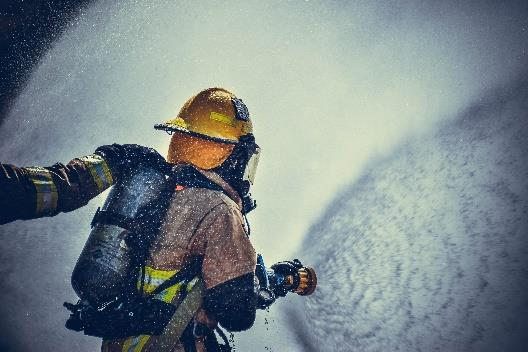
The MSA G1 SCBA is a positive-pressure, open-circuit self-contained breathing apparatus designed for personnel operating in immediately dangerous to life or health (IDLH) atmospheres — from structural firefighting and industrial emergencies to Aircraft Rescue and Firefighting (ARFF) operations at airports. The system delivers breathable air from a self-contained carbon composite cylinder at the wearer's back, with continuous positive pressure maintained throughout the breathing cycle to prevent inward leakage of contaminants.
In aviation contexts the G1 is deployed by airport fire and rescue services wherever NFPA 403 or ICAO Annex 14-compliant SCBA is mandated — seated in remote-mount brackets on ARFF vehicles and donned during aircraft extrication, fuel fire suppression, and cabin rescue operations. Its low-profile cylinder design is suited to the confined egress conditions common around aircraft fuselages and engine nacelles.
The G1 is available in 2216, 4500, and 5500 psig cylinder configurations with 30-, 45-, and 60-minute rated service times, giving procurement teams flexibility to match air duration to operational risk profiles. The control module integrates dual-colour LCD and analogue displays, a four-increment colour-coded heads-up display (HUD) inside the facepiece, integrated PASS (Personal Alert Safety System), and optional electronic communications — all powered from a single central rechargeable battery. Threaded or quick-connect cylinder attachment enables rapid field replacement between deployments.
The current production standard is the G1 XR Edition, certified to NFPA 1970 (2025 Edition), which consolidates the former NFPA 1981/1982 standards and adds Bluetooth radio-connection indicators, removable washable soft goods, and a revised end-of-service-time indicator (EOSTI) triggering at 31% remaining pressure on 4500 psig systems. The Hycar-rubber facepiece weighs under 1.5 lb, is available in three sizes, and has been cold-tested to −30 °F for high-latitude and cooled-hangar environments.
Technical specifications.
| Cylinder pressure options | 2216 / 4500 / 5500 psig |
| Rated service times | 30 / 45 / 60 min |
| PASS pre-alarm (immobility) | ~20 s |
| PASS full alarm (immobility) | 30 s |
| Low-air warning threshold (4500 psig system) | 1575 psig |
| EOSTI trigger (4500 psig system) | 31 % remaining |
| Cylinder material | Carbon composite (standard, Eclipse, Super Light variants) |
| Composite cylinder service life | 15 years |
| Certifications | NIOSH 42 CFR Part 84 · NFPA 1970 (2025 Ed.) · SEI · OSHA 29 CFR 1910.134 |
| Minimum operating temperature | -25 / -32 |
| Facepiece weight | <1.5 lb |
| Facepiece sizes | Small / Medium / Large |
Use cases.
- ›Aircraft Rescue and Firefighting (ARFF) — vehicle-mounted SCBA for fuel-fire suppression and post-crash cabin extrication at commercial and military aerodromes
- ›Airport fire station structural firefighting — terminal, hangar, and fuel-farm incidents requiring NFPA 1981/1970-compliant respiratory protection
- ›Industrial and petrochemical rescue — confined-space entry, refinery incidents, and utility emergencies where IDLH atmospheres are present
- ›Military and government emergency services requiring NIOSH CBRN-approved respiratory protection
- ›MRO and maintenance operations involving hazardous paint booths, composite-fibre work areas, or enclosed aircraft bays with poor air quality
- ›Emergency response teams at GCC airports and air bases operating in high-ambient-temperature environments where EOSTI and PASS reliability are critical
Replacements & compatible alternatives.
Comparable Fire Safety & Rescue from other suppliers. Cross-shop on specs — confirm exact fit and compatibility with the supplier before specifying.