
Side-by-side
PosiCharge DVS 300 / 400 Dual-Vehicle Fast Charger vs PosiCharge High Voltage Power Station (HVPS)
Spec comparison for two products on Aviation Souk. Both compete in Ground Support Equipment (GSE).
Ground Support Equipment (GSE)
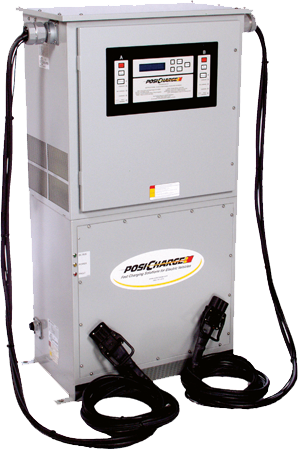
PosiCharge DVS 300 / 400 Dual-Vehicle Fast Charger
by ampure
Stand-alone 30-40 kW charger: two eGSE vehicles at 250 A, or one at 500 A
Ground Support Equipment (GSE)
PosiCharge High Voltage Power Station (HVPS)
by ampure
CCS1/NACS DC charging for high-voltage eGSE — standalone or dropped into an existing DVS/MVS
| Cost of ownership | PosiCharge DVS 300 / 400 Dual-Vehicle Fast Charger | PosiCharge High Voltage Power Station (HVPS) |
|---|---|---|
| Price tier | — | — |
| Lead time (weeks) | ?–? | ?–? |
| Delivery | — | — |
| Install | — | — |
| GCC airports deployed | 0 | 0 |
| Certifications | 0 | 0 |
Specs
Technical specifications.
| Spec | PosiCharge DVS 300 / 400 Dual-Vehicle Fast Charger | PosiCharge High Voltage Power Station (HVPS) |
|---|---|---|
| Output power | 30 (DVS 300) / 40 (DVS 400) kW | — |
| Battery voltage range | 24-96 V | — |
| Max output current (dual mode) | 250 A | — |
| Max output current (single mode) | 500 A | — |
| Charge ports | 2 (or single vehicle at double rate) | 1 |
| Input power | 480 / 600 VAC, 3-phase | — |
| Full-load amp draw | 40 A @480 V / 32 A @600 V | — |
| Max circuit breaker rating | 50/40 A (DVS 300); 70/60 A (DVS 400) | — |
| Power factor | 0.96 | — |
| Efficiency | 90 % | — |
| Lithium battery support | CAN communication via PosiCharge CAN protocol | — |
| Battery identification | Smart Battery Monitor and Identification Device (BMID) | — |
| Output connectors | Euro and Burton options | — |
| Enclosure rating | NEMA 3R (outdoor) | NEMA 3S (harsh outdoor industrial environments) |
| Operating temperature | -40 to +50 °C | — |
| Dimensions (H×W×D) | 60 × 32.4 × 21.9 in | — |
| Weight | 905 (DVS 300) / 915 (DVS 400) lb | — |
| Communication port | RS232 | — |
| Output power (standalone mode) | — | up to 30 kW |
| Output power (DVS/MVS DC-bus integrated) | — | approx. 25 kW |
| Connector types | — | CCS1 or NACS, standard 5 m cable |
| Operating modes | — | Standalone (AC input) or integrated into PosiCharge DVS/MVS via DC bus |
| Integration note | — | Drop-in replacement for one standard power station; host software update required |
| Vehicle compatibility | — | High-voltage eGSE and road EVs (per OEM) |
| Availability | — | Deliveries from Q1 2026 (announced Sep 2025) |
Decide
Ask Aviation Souk to pick for your tender.
The AI weighs both products against your specific brief — airport, certifications, lead time, budget — and tells you which fits.
Ask the AI →