
Side-by-side
PosiCharge DVS 300 / 400 Dual-Vehicle Fast Charger vs PosiCharge MVS 800 Multi-Vehicle Fast-Charge System
Spec comparison for two products on Aviation Souk. Both compete in Ground Support Equipment (GSE).
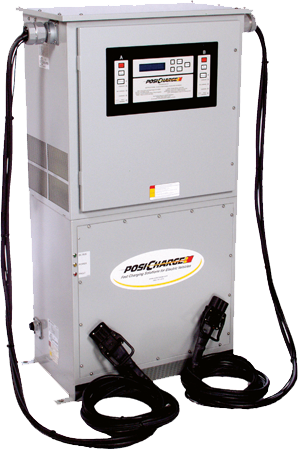
Ground Support Equipment (GSE)
PosiCharge DVS 300 / 400 Dual-Vehicle Fast Charger
by ampure
Stand-alone 30-40 kW charger: two eGSE vehicles at 250 A, or one at 500 A
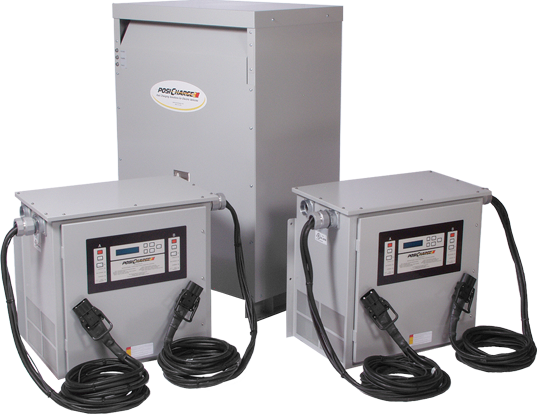
Ground Support Equipment (GSE)
PosiCharge MVS 800 Multi-Vehicle Fast-Charge System
by ampure
80 kW multi-port fast charging for up to 16 eGSE vehicles from a single utility connection
| Cost of ownership | PosiCharge DVS 300 / 400 Dual-Vehicle Fast Charger | PosiCharge MVS 800 Multi-Vehicle Fast-Charge System |
|---|---|---|
| Price tier | — | — |
| Lead time (weeks) | ?–? | ?–? |
| Delivery | — | — |
| Install | — | — |
| GCC airports deployed | 0 | 0 |
| Certifications | 0 | 3 |
Specs
Technical specifications.
| Spec | PosiCharge DVS 300 / 400 Dual-Vehicle Fast Charger | PosiCharge MVS 800 Multi-Vehicle Fast-Charge System |
|---|---|---|
| Output power | 30 (DVS 300) / 40 (DVS 400) kW | — |
| Battery voltage range | 24-96 V | 24-96 V |
| Max output current (dual mode) | 250 A | 250 A |
| Max output current (single mode) | 500 A | 500 A |
| Charge ports | 2 (or single vehicle at double rate) | — |
| Input power | 480 / 600 VAC, 3-phase | 480 / 600 VAC, 3-phase |
| Full-load amp draw | 40 A @480 V / 32 A @600 V | 100 A @480 V / 80 A @600 V |
| Max circuit breaker rating | 50/40 A (DVS 300); 70/60 A (DVS 400) | — |
| Power factor | 0.96 | 0.96 |
| Efficiency | 90 % | 95 % |
| Lithium battery support | CAN communication via PosiCharge CAN protocol | — |
| Battery identification | Smart Battery Monitor and Identification Device (BMID) | — |
| Output connectors | Euro and Burton options | Euro and Burton options |
| Enclosure rating | NEMA 3R (outdoor) | NEMA 3R (outdoor) |
| Operating temperature | -40 to +50 °C | -40 to +50 °C |
| Dimensions (H×W×D) | 60 × 32.4 × 21.9 in | — |
| Weight | 905 (DVS 300) / 915 (DVS 400) lb | — |
| Communication port | RS232 | RS232 |
| Powerserver output power | — | 80 kW |
| Powerstation output power | — | 60 kW |
| Simultaneous vehicles | — | up to 16 |
| Battery communication | — | BMID; GBT CAN protocol compliant |
| Powerserver dimensions (H×W×D) | — | 62 × 42 × 27 in |
| Powerserver weight | — | 1,405 lb |
| Powerstation dimensions (H×W×D) | — | 30 × 30 × 19 in |
| Powerstation weight | — | 304 lb |
Decide
Ask Aviation Souk to pick for your tender.
The AI weighs both products against your specific brief — airport, certifications, lead time, budget — and tells you which fits.
Ask the AI →