
Side-by-side
Pathfinder Receiver (Base Station Kit) vs McQ TacSAD Situational Awareness Display
Spec comparison for two products on Aviation Souk. Both compete in perimeter-security.
perimeter-security
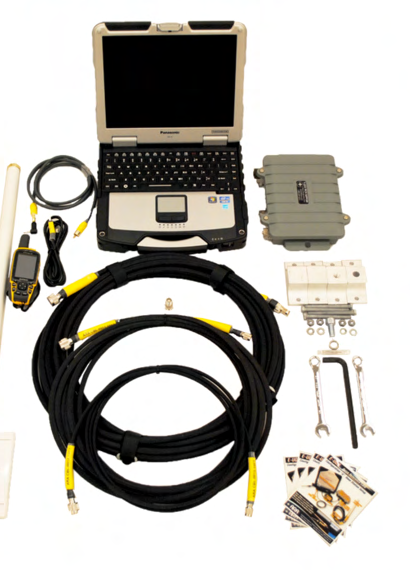
Pathfinder Receiver (Base Station Kit)
by ara
MIL-STD-810-rated base station that turns Pathfinder ground sensors into a live intrusion-alert network
perimeter-security
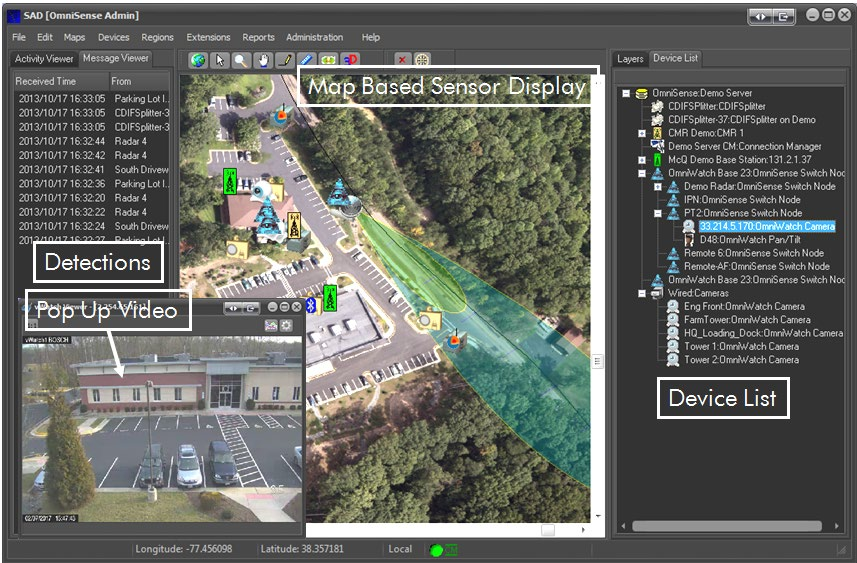
McQ TacSAD Situational Awareness Display
by mcq
Map-based C2 software for McQ sensor networks - real-time alerts, video, device health and full sensor configuration from one display.
| Cost of ownership | Pathfinder Receiver (Base Station Kit) | McQ TacSAD Situational Awareness Display |
|---|---|---|
| Price tier | — | — |
| Lead time (weeks) | ?–? | ?–? |
| Delivery | — | — |
| Install | — | — |
| GCC airports deployed | 0 | 0 |
| Certifications | 2 | 0 |
Specs
Technical specifications.
| Spec | Pathfinder Receiver (Base Station Kit) | McQ TacSAD Situational Awareness Display |
|---|---|---|
| Dimensions (H x D x W) | 2.1 x 7.2 x 8.4 in | — |
| Weight | 3.76 lb | — |
| Environmental rating | MIL-STD-810: Method 506.4 Procedure I (rain); Method 510.4 Procedures I and II (blowing dust and sand) | — |
| Operating temperature | -32 to +49 C (-25 to +120 F) | — |
| Storage temperature | -33 to +71 C (-28 to +160 F) | — |
| Connectors | 2x MIL-style bayonet (power, RS-232 serial); 1x waterproof RJ-45 Ethernet; 1x TNC female antenna | — |
| Power | 100-240 VAC, 47-63 Hz line power providing 12 VDC | — |
| Sensor link range | typically up to 10 km, terrain dependent; elevating the receiver antenna greatly increases effective range | — |
| Kit contents | Base station with Pathfinder software installed, waterproof Ethernet receiver, antenna, 10 ft antenna cable, antenna mounting hardware, installation tools, user manual, quick-reference cards | — |
| Standard sensor pairing | Kits normally include 60 Mini or 30 XL sensors; individual quantities customisable and expandable | — |
| Deployment | User-friendly, ready to use in minutes; no internet, gateways or relay infrastructure required | — |
| Export classification | ECCN 6A999.a under US Export Administration Regulations; export licence may be required depending on destination, user and end use | — |
| Platform | — | Windows 7 / 10 PC laptop or tablet (single-user application), supplied by McQ or the customer |
| PC platform requirements | — | Display, keyboard, USB and IP I/O ports, hard-drive storage, AC or battery power, Windows Server OS, performance adequate for streaming sensor data |
| Mobile variant platform | — | Android tablet, bundled with ATAK; rugged case with rechargeable battery |
| Mobile radio link | — | 900 MHz radio modem to sensor units |
| Display | — | Real-time GIS map with sensor icons, detection log, pop-up video, activity and status windows |
| UI windows | — | Activity Data (past detection data), Image Data (past pictures/video), Status Data (battery life and health per unit), Device List, unit Configuration set-up window, time-rolling detection log |
| Alerting | — | Flashing sensor icons and audio announcements on target detection; instant map display of the detecting sensor's location |
| Sensor control | — | Full configuration control of all McQ sensor products over the network; review data and reconfigure units as needed |
| Software modules | — | Server software with Windows application, GIS mapping, database management, McQ communications management, McQ OmniPush XML, client user interface |
| Data integration | — | McQ OmniPush XML push to other common operating picture systems; XML, CoT, JSON or CDIF outputs via TCP/IP |
| Sensor network interface | — | McQ Base Station unit provides IP network connection into the TacSAD PC; Base Station / Wireless Relay units translate RF radio-modem data into a serial CDIF binary stream |
| Architecture | — | Multiple SAD clients per server; multiple server connections across a distributed network; worldwide remote access |
| Storage | — | Archival storage of sensor data and video for review and replay of target activity and system status |
Decide
Ask Aviation Souk to pick for your tender.
The AI weighs both products against your specific brief — airport, certifications, lead time, budget — and tells you which fits.
Ask the AI →