
Side-by-side
Pathfinder Receiver (Base Station Kit) vs Senstar FlexZone
Spec comparison for two products on Aviation Souk. Both compete in perimeter-security.
perimeter-security
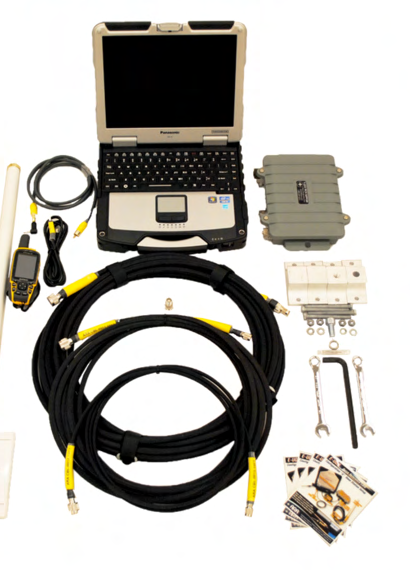
Pathfinder Receiver (Base Station Kit)
by ara
MIL-STD-810-rated base station that turns Pathfinder ground sensors into a live intrusion-alert network
perimeter-security
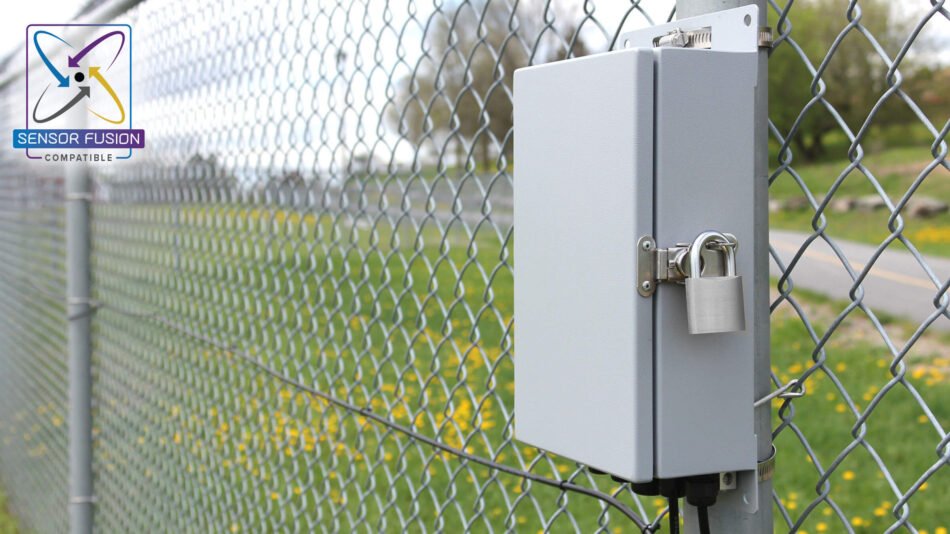
Senstar FlexZone
by Senstar Technologies
Ranging fence-mounted coaxial sensor with metre-level localisation — up to 600 m per processor.
| Cost of ownership | Pathfinder Receiver (Base Station Kit) | Senstar FlexZone |
|---|---|---|
| Price tier | — | — |
| Lead time (weeks) | ?–? | ?–? |
| Delivery | — | — |
| Install | — | — |
| GCC airports deployed | 0 | 0 |
| Certifications | 2 | 0 |
Specs
Technical specifications.
| Spec | Pathfinder Receiver (Base Station Kit) | Senstar FlexZone |
|---|---|---|
| Dimensions (H x D x W) | 2.1 x 7.2 x 8.4 in | — |
| Weight | 3.76 lb | — |
| Environmental rating | MIL-STD-810: Method 506.4 Procedure I (rain); Method 510.4 Procedures I and II (blowing dust and sand) | — |
| Operating temperature | -32 to +49 C (-25 to +120 F) | — |
| Storage temperature | -33 to +71 C (-28 to +160 F) | — |
| Connectors | 2x MIL-style bayonet (power, RS-232 serial); 1x waterproof RJ-45 Ethernet; 1x TNC female antenna | — |
| Power | 100-240 VAC, 47-63 Hz line power providing 12 VDC | — |
| Sensor link range | typically up to 10 km, terrain dependent; elevating the receiver antenna greatly increases effective range | — |
| Kit contents | Base station with Pathfinder software installed, waterproof Ethernet receiver, antenna, 10 ft antenna cable, antenna mounting hardware, installation tools, user manual, quick-reference cards | — |
| Standard sensor pairing | Kits normally include 60 Mini or 30 XL sensors; individual quantities customisable and expandable | — |
| Deployment | User-friendly, ready to use in minutes; no internet, gateways or relay infrastructure required | — |
| Export classification | ECCN 6A999.a under US Export Administration Regulations; export licence may be required depending on destination, user and end use | — |
| Sensor type | — | Fence-mounted ranging sensor, loose-tube coaxial cable |
| Range per processor | — | Up to 600 m |
| Localisation | — | +/-3 m |
| Detection zones | — | Up to 60 distinct, individually sized software-defined zones per processor |
| Multiple simultaneous intrusions | — | Accurately located, including in background environmental noise |
| Signal processing | — | High-speed sampling with location data; algorithms differentiate point disturbances (real intrusions) from spatially distributed disturbances (wind, rain) |
| Nuisance alarm mitigation | — | EDAPT: precision ranging accounts for background environmental noise near a disturbance before alarming; implemented per processor, networked or not |
| Sensitivity | — | Per-meter sensitivity leveling adapts to changes in fence construction and response |
| Cable cut resilience | — | Protection continues in the event of a cable cut |
| Sensor cable | — | Loose-tube coaxial; carries both power and data, reducing power-distribution and comms cabling; armored version for barbed wire, concertina and damage-prone areas; attached with UV-resistant cable ties |
| Fence compatibility | — | Chain-link, standard welded mesh, expanded metal mesh, palisade; non-standard fences and interior/exterior walls also possible |
| Processor | — | Outdoor-rated, mounts on a fence post or other surface; most perimeters installed in a day |
| Gate protection | — | Cable installable on swinging gates as an independent zone; gate latches monitored via on-board auxiliary input; sliding gates via Wireless Gate Sensor or UltraWave |
| Communications | — | On-board relay outputs and auxiliary inputs; Ethernet, RS-422 and fiber optic communication cards; network shareable with other Senstar sensors |
| Configuration | — | Windows-based software over USB or network connection |
| AI readiness | — | Senstar Sensor Fusion Engine ready - AI-based added detection and nuisance-alarm rejection for high-risk or problematic perimeter sections |
| Integration | — | Network Manager provides a common unified interface to Senstar video/security management and third-party systems |
| Certification | — | FlexZone-60 certified by UK NPSA against version 6.0 of the NPSA Barrier Mounted PIDS Standard |
Decide
Ask Aviation Souk to pick for your tender.
The AI weighs both products against your specific brief — airport, certifications, lead time, budget — and tells you which fits.
Ask the AI →