
Side-by-side
NovAtel OEM729 GNSS Receiver Board vs BroadShield GNSS Jamming & Spoofing Detection (SecureSync Interference Detection Suite)
Spec comparison for two products on Aviation Souk. Both compete in Air Traffic Control & Navigation Aids.
Air Traffic Control & Navigation Aids
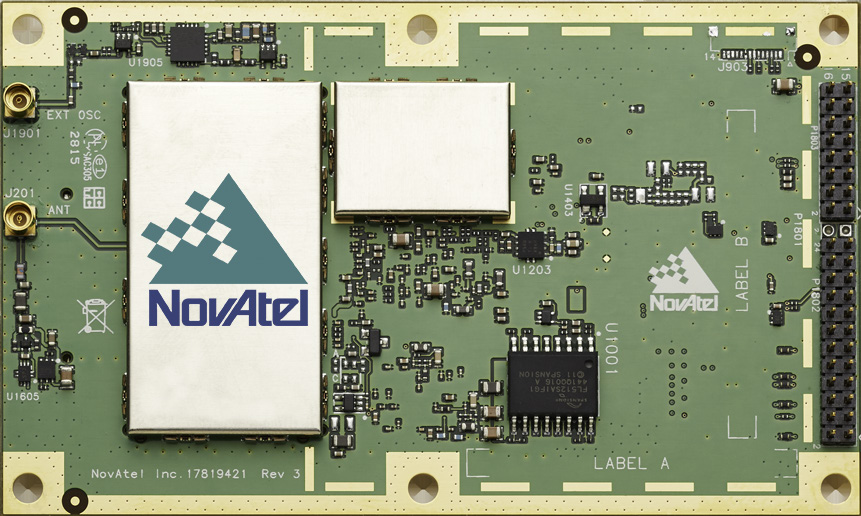
NovAtel OEM729 GNSS Receiver Board
by Hexagon AB — Safety, Infrastructure & Geospatial
Multi-frequency, all-constellation OEM7 receiver board with GRIT interference and spoofing detection and external oscillator input

Air Traffic Control & Navigation Aids
BroadShield GNSS Jamming & Spoofing Detection (SecureSync Interference Detection Suite)
by safran-trusted-4d
Patented software algorithms that detect GPS jamming and spoofing on standard receivers — no extra hardware — and switch timing to safe holdover automatically
| Cost of ownership | NovAtel OEM729 GNSS Receiver Board | BroadShield GNSS Jamming & Spoofing Detection (SecureSync Interference Detection Suite) |
|---|---|---|
| Price tier | — | — |
| Lead time (weeks) | ?–? | ?–? |
| Delivery | — | — |
| Install | — | — |
| GCC airports deployed | 0 | 0 |
| Certifications | 5 | 0 |
Specs
Technical specifications.
| Spec | NovAtel OEM729 GNSS Receiver Board | BroadShield GNSS Jamming & Spoofing Detection (SecureSync Interference Detection Suite) |
|---|---|---|
| Signal tracking | GPS L1 C/A, L1C, L2C, L2P, L5; GLONASS L1 C/A, L2 C/A, L2P, L3, L5; Galileo E1, E5 AltBOC, E5a, E5b, E6; BeiDou B1I, B1C, B2I, B2a, B2b, B3I; QZSS L1 C/A, L1C, L1S, L2C, L5, L6; NavIC L5; SBAS L1/L5; up to 5 L-Band channels | — |
| GNSS resilience | spoofing detection, interference detection and mitigation provided by GRIT; Receiver Autonomous Integrity Monitoring (RAIM) | — |
| Horizontal position accuracy (RMS) | 1.5 m single point L1; 1.2 m single point L1/L2; 40 cm DGPS; RTK 1 cm + 1 ppm; TerraStar-C PRO / TerraStar-X 2 cm (subscription) | — |
| Time accuracy | <5 ns RMS; velocity accuracy <0.03 m/s RMS; data rate up to 100 Hz (measurements and position) | — |
| Time to first fix | cold start <34 s (typ), hot start <20 s (typ); signal reacquisition L1 <0.5 s, L2 <1.0 s (typ) | — |
| External oscillator input | MMCX input for disciplined timing applications | — |
| Interfaces | 1x RS-232/RS-422 + 2x LVCMOS serial up to 460,800 bps, 2x CAN 1 Mbps, USB 2.0, 10/100 Ethernet with web GUI, 2 event inputs, 1 event output, PPS output | — |
| Differential corrections | RTCM 2.1/2.3/3.0/3.1/3.2/3.3, CMR, CMR+, RTCA, NOVATELX; NMEA 0183 and NovAtel ASCII/binary logs | — |
| Power | 3.3 VDC +/-5%; 0.9 W (GPS L1 typ) to 1.8 W (all constellations/frequencies with L-Band, typ); antenna port 5 VDC, 200 mA max | — |
| Physical | 60 x 100 x 9 mm, 48 g; form-factor and pin-compatible with previous-generation OEM628; MMCX antenna input | — |
| Environmental | -40 C to +85 C operating, -55 C to +95 C storage; MIL-STD-810G vibration (Cat 24, 20 g RMS), operating shock 40 g, acceleration 16 g; IEC 60068-2-6, ISO 9022-31-06 bump | — |
| Field-upgradeable OEM7 firmware options | GRIT, RTK, ALIGN heading, GLIDE, STEADYLINE, SPAN GNSS+INS | — |
| Jamming detection | — | CW tone, swept CW, pulsed CW, AWGN, BPSK and more |
| Spoofing detection | — | GNSS simulator signatures, GPS data anomalies, data inconsistencies, position jumps, time jumps |
| Monitored signals | — | GPS L1 (1575.42 MHz) and L2 (1227.6 MHz) |
| Hardware requirements | — | Works with standard commercial GPS/GNSS receivers — no additional hardware required |
| SecureSync integration (SS-OPT-BSH) | — | event logging, alarms, SNMP/email notification, automatic disabling of GNSS sync with switch to backup reference or oscillator holdover |
| Embeddable software library | — | convertible to most major programming languages, runs on nearly any operating system |
| Integration requirements | — | GPS receiver providing raw GPS NAV data + processing unit + Safran integration support |
| Threat library updates | — | Detection algorithms regularly updated against new and emerging threats; field-proven 10+ years |
| Ordering / variants | — | SS-OPT-BSH — Interference Detection Suite option for SecureSync time servers (software option, also available as field upgrade); BroadShield SDK — embeddable software library for OEM hardware platforms via Safran Federal Systems; complemented by BroadSense interference detection sensors. |
Decide
Ask Aviation Souk to pick for your tender.
The AI weighs both products against your specific brief — airport, certifications, lead time, budget — and tells you which fits.
Ask the AI →