
Side-by-side
BroadShield GNSS Jamming & Spoofing Detection (SecureSync Interference Detection Suite) vs GSS200D Detector — GNSS Interference Detection & Analysis Solution
Spec comparison for two products on Aviation Souk. Both compete in Air Traffic Control & Navigation Aids.

Air Traffic Control & Navigation Aids
BroadShield GNSS Jamming & Spoofing Detection (SecureSync Interference Detection Suite)
by safran-trusted-4d
Patented software algorithms that detect GPS jamming and spoofing on standard receivers — no extra hardware — and switch timing to safe holdover automatically
Air Traffic Control & Navigation Aids
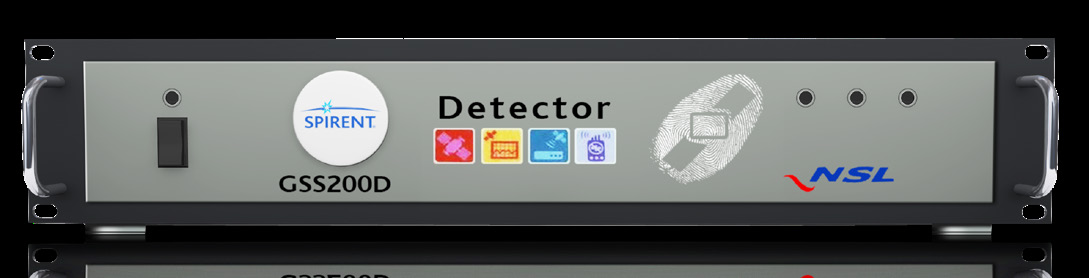
GSS200D Detector — GNSS Interference Detection & Analysis Solution
by spirent
24/7 multi-frequency GNSS RF interference detection with ICAO Annex 10-aligned civil aviation variant and secure cloud analytics
| Cost of ownership | BroadShield GNSS Jamming & Spoofing Detection (SecureSync Interference Detection Suite) | GSS200D Detector — GNSS Interference Detection & Analysis Solution |
|---|---|---|
| Price tier | — | — |
| Lead time (weeks) | ?–? | ?–? |
| Delivery | — | — |
| Install | — | — |
| GCC airports deployed | 0 | 0 |
| Certifications | 0 | 0 |
Specs
Technical specifications.
| Spec | BroadShield GNSS Jamming & Spoofing Detection (SecureSync Interference Detection Suite) | GSS200D Detector — GNSS Interference Detection & Analysis Solution |
|---|---|---|
| Jamming detection | CW tone, swept CW, pulsed CW, AWGN, BPSK and more | — |
| Spoofing detection | GNSS simulator signatures, GPS data anomalies, data inconsistencies, position jumps, time jumps | — |
| Monitored signals | GPS L1 (1575.42 MHz) and L2 (1227.6 MHz) | — |
| Hardware requirements | Works with standard commercial GPS/GNSS receivers — no additional hardware required | — |
| SecureSync integration (SS-OPT-BSH) | event logging, alarms, SNMP/email notification, automatic disabling of GNSS sync with switch to backup reference or oscillator holdover | — |
| Embeddable software library | convertible to most major programming languages, runs on nearly any operating system | — |
| Integration requirements | GPS receiver providing raw GPS NAV data + processing unit + Safran integration support | — |
| Threat library updates | Detection algorithms regularly updated against new and emerging threats; field-proven 10+ years | — |
| Ordering / variants | SS-OPT-BSH — Interference Detection Suite option for SecureSync time servers (software option, also available as field upgrade); BroadShield SDK — embeddable software library for OEM hardware platforms via Safran Federal Systems; complemented by BroadSense interference detection sensors. | — |
| Function | — | 24/7 automated GNSS RF interference detection, capture and analysis |
| Supported bands — GPS GLO L1 variant | — | GPS / Galileo / GLONASS / QZSS L1 |
| Supported bands — GPS L1 L5 variant | — | GPS / Galileo L1 and L5 (E5a); SBAS (WAAS, EGNOS, MSAS, GAGAN, SDCM) |
| Monitored bandwidth — GPS L1 | — | 1575.42 MHz centre; 16 MHz (±8 MHz, 3 dB) on GPS GLO L1 variant, 20 MHz (±10 MHz) on GPS L1 L5 variant |
| Monitored bandwidth — GLONASS L1 | — | 1602 MHz centre; 9 MHz (±4.5 MHz, 3 dB) |
| Monitored bandwidth — GPS L5 | — | 1176.45 MHz centre; 20 MHz (±10 MHz) |
| RFI detection basis — GPS GLO L1 variant | — | Calibration level, with absolute power |
| RFI detection basis — GPS L1 L5 variant | — | GPS L1: ICAO Annex 10 interference mask; GPS L5: EUROCAE Galileo MOPS for E5a; DME/TACAN pulsed RFI identification |
| Event characterisation | — | Automatic interference typing (unintentional interference vs jamming) and priority ranking by likely impact on GNSS services |
| Event records | — | Spectrum and spectrogram with time, frequency, duration, power, type and priority per event |
| Alerting | — | Near-instantaneous email notification on event detection (user-selectable) |
| Data management | — | Encrypted event upload to Spirent PT Cloud; secure authenticated web-browser access with analytics, visualization and trend analysis |
| Deployment form factor | — | Rack-mount field detector unit installed at the site of interest, paired with the secure PT Cloud data server |
| Mitigation support | — | Captured RFI events can be re-synthesised and replayed on Spirent PT TestBench to test receivers (available separately) |
Decide
Ask Aviation Souk to pick for your tender.
The AI weighs both products against your specific brief — airport, certifications, lead time, budget — and tells you which fits.
Ask the AI →