
Side-by-side
VersaPNT Assured Positioning, Navigation & Timing Unit vs Septentrio PolaRx5 Multi-frequency GNSS Reference Receiver
Spec comparison for two products on Aviation Souk. Both compete in Air Traffic Control & Navigation Aids.
Air Traffic Control & Navigation Aids
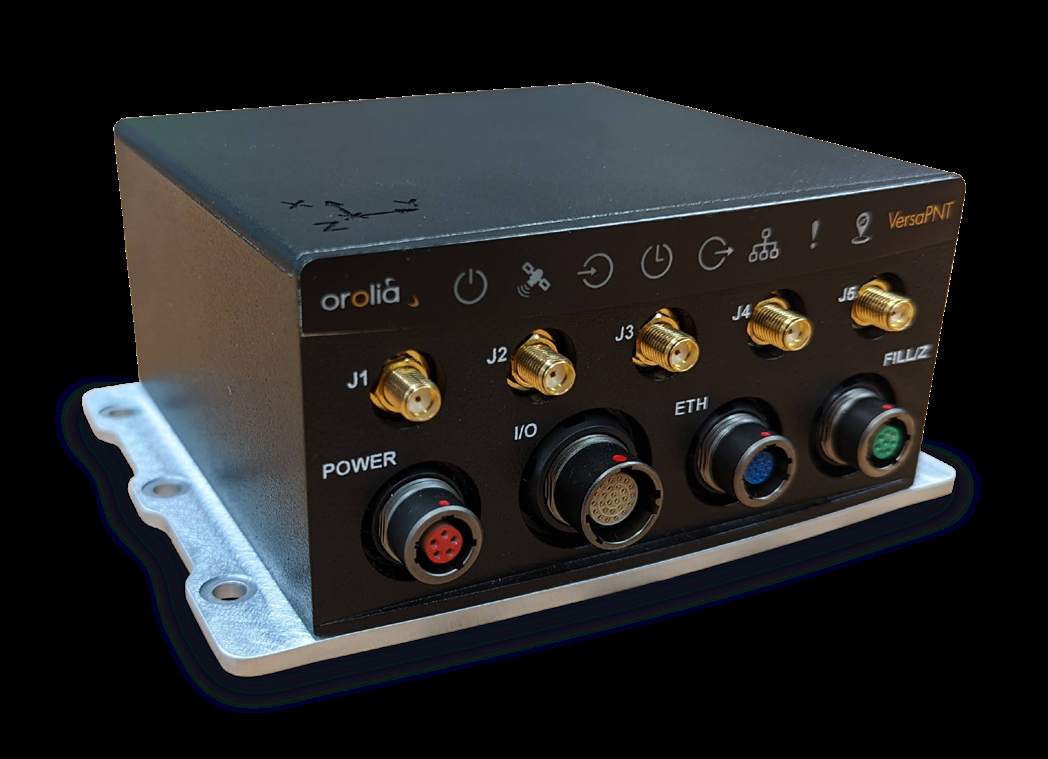
VersaPNT Assured Positioning, Navigation & Timing Unit
by safran-trusted-4d
Compact rugged GNSS + inertial sensor-fusion unit — navigation system, master clock and NTP/PTP time server in one 1 kg IP65 box
Air Traffic Control & Navigation Aids
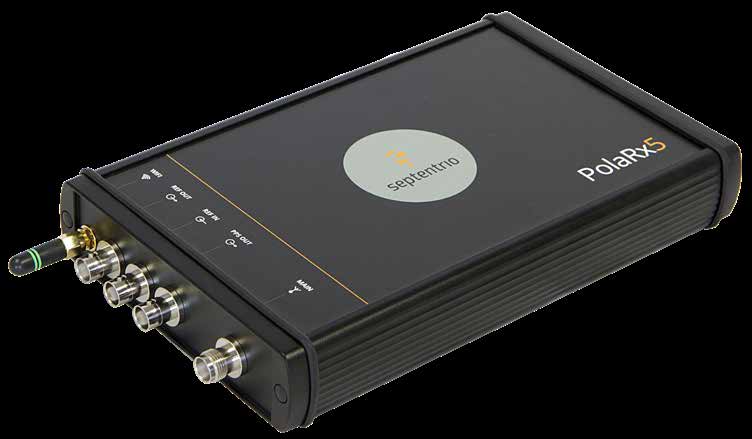
Septentrio PolaRx5 Multi-frequency GNSS Reference Receiver
by septentrio
Best-in-class 544-channel GNSS reference receiver with AIM+ interference monitoring, spoofing detection and OSNMA for permanent monitoring stations
| Cost of ownership | VersaPNT Assured Positioning, Navigation & Timing Unit | Septentrio PolaRx5 Multi-frequency GNSS Reference Receiver |
|---|---|---|
| Price tier | — | — |
| Lead time (weeks) | ?–? | ?–? |
| Delivery | — | — |
| Install | — | — |
| GCC airports deployed | 0 | 0 |
| Certifications | 5 | 6 |
Specs
Technical specifications.
| Spec | VersaPNT Assured Positioning, Navigation & Timing Unit | Septentrio PolaRx5 Multi-frequency GNSS Reference Receiver |
|---|---|---|
| Sensor fusion | FlexFusion engine combining GNSS + internal tactical-grade MEMS IMU + precision oscillator; external IMU and alternative-navigation inputs supported | — |
| GNSS | 72-channel L1 receiver, multi-constellation capability; SMA input with +5 VDC antenna feed; AJAS anti-jam antenna compatible | — |
| Oscillator options | OCXO, high-performance OCXO, mRO-50 miniature rubidium | — |
| 1PPS accuracy to UTC (locked) | +/-50 ns; frequency accuracy 5x10^-12 (OCXO) to 1x10^-12 (mRO-50) averaged over 24h | — |
| Holdover 1PPS drift (mRO-50) | 0.2 us @ 4 h, 1.5 us @ 24 h, 20 us @ 7 days; (OCXO): 3 us @ 4 h, 40 us @ 24 h | — |
| Position accuracy | 2.5 m RMS horizontal, 5.0 m RMS vertical (GPS L1, typical); velocity +/-0.05 m/s; heading <0.2 deg RMS with GPS; 400 Hz nav output rate | — |
| Operational readiness (hot start) | 1 ms UTC accuracy in 60 s, 1 us in 200 s | — |
| Timing I/O | 1PPS, configurable pulses to 10 MHz, IRIG DCLS (A/B/E/G, NASA-36), HaveQuick, NMEA 0183 over RS-232/RS-485, 10 MHz sine (SMA) | — |
| Network | NTP v2/v3/v4 server, PTP IEEE 1588 v1/v2 master, dual 10/100/1000bT; SNMP v2/v3, JSON RPC, HTTPS web management | — |
| GNSS jamming/spoofing detection | optional embedded | — |
| Power | 10-32 VDC, <25 W typical (OCXO), 0.4 W standby; size 147.3 x 127.5 x 63.0 mm VITA 75; weight 1.0 kg | — |
| Environment | -40 to +71 C operating (OCXO; -10 to +45 C mRO-50), IP65, MIL-STD-810G shock/vibration, MIL-STD-461F EMI/EMC, 45,000 ft altitude | — |
| Ordering / variants | Oscillator: OCXO / high-performance OCXO / mRO-50 mini-rubidium (rugged low-phase-noise OCXO option for high-vibration platforms); optional internal option board for additional RS-232/RS-485/DCLS interfaces; optional embedded jamming/spoofing detection; optional VICTORY interface; external IMU input. SAASM and M-Code receiver variants are export-controlled (authorised government users only) and excluded from this listing. | — |
| Hardware channels | — | 544 |
| Constellations tracked | — | GPS (incl. P-code L1/L2, L2C, L1C, L5), GLONASS (L1, L2, L3), Galileo (E1, E5a, E5b, E5 AltBOC, E6), BeiDou (B1I, B1C, B2I, B2a, B2b, B3I), NavIC L5, QZSS, SBAS |
| Interference monitoring | — | AIM+ monitors, flags and mitigates narrowband and wideband interference, jamming and spoofing; integrated spectrum analyser |
| Anti-spoofing | — | Galileo OSNMA support; spoofing detection and flagging via AIM+ |
| Multipath / tracking robustness | — | APME+ a-posteriori multipath estimator (code + phase); LOCK+ tracking under shocks and scintillation |
| Carrier phase precision (all signals) | — | 1–1.3 mm |
| Pseudorange precision (unsmoothed) | — | 1.5 cm (E5 AltBOC) to 25 cm (GLONASS L1 C/A) |
| Static precision (RMS, horizontal) | — | 3 mm + 0.5 ppm |
| Max raw data rate | — | 100 Hz |
| Time accuracy (1PPS out) | — | 5 ns |
| Data formats | — | SBF, RINEX v2.x/3.05/4.00, BINEX, RTCM (all MSM), CMR 2.0, NMEA v2.30/v4.10 |
| Interfaces | — | 4 hi-speed serial, 100 Mbps Ethernet (PoE), Wi-Fi 802.11 b/g/n, USB device + USB host, 10 MHz REF IN/OUT, PPS out (max 100 Hz), HTTP/HTTPS, FTP/SFTP, NTRIP |
| Onboard logging | — | 16 GB, up to 40 logging jobs; SYNC+ smart telemetry |
| Power consumption | — | 1.8–4.7 W |
| Input voltage | — | 9–30 VDC |
| Dimensions | — | 235 × 140 × 37 mm |
| Weight | — | 0.9 kg |
| IP rating | — | IP65 |
| Operating temperature | — | −40 to +65 °C |
Decide
Ask Aviation Souk to pick for your tender.
The AI weighs both products against your specific brief — airport, certifications, lead time, budget — and tells you which fits.
Ask the AI →