
Airfield lightning detection & alert systems — how dual-sensor warning works
Lightning is one of the few weather hazards that forces a full stop to ramp operations — fuelling, baggage handling, pushback and ground crew work all halt when a storm closes in. An onairfield lightning detection and…
Lightning is one of the few weather hazards that forces a full stop to ramp operations — fuelling, baggage handling, pushback and ground crew work all halt when a storm closes in. An on-airfield lightning detection and alert system gives operations teams the minutes of warning they need to clear the apron safely, and the all-clear signal to restart without guesswork.
How a dual-sensor lightning alert system works
Single-sensor detectors must choose between sensitivity (early warning, more false alarms) and certainty (fewer false alarms, less warning). Dual-sensor systems solve this by combining two different detection methods and requiring both to agree:
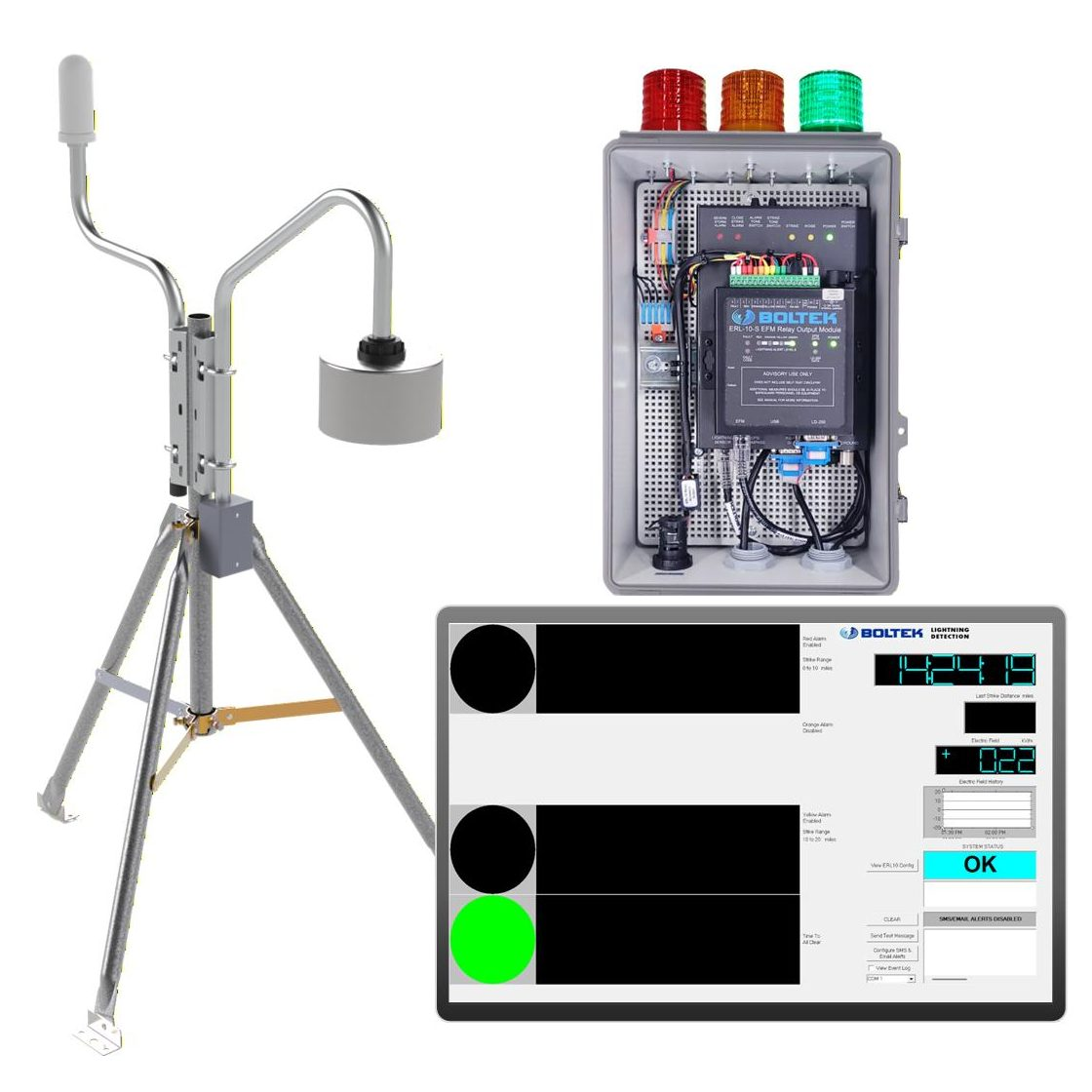
- An electric-field mill (e.g. Boltek EFM-100) continuously measures the local electrostatic field. A charged storm cell overhead drives the field reading up before the first strike — this is the earliest available warning signal.
- A strike sensor / antenna (e.g. Boltek ANT-2) detects the RF signature of actual lightning discharges and estimates range in banded zones (inner and outer warning rings).
A relay/controller module (e.g. the Boltek ERL-10 relay output module) fuses both inputs and drives the alerting hardware: red/yellow/green cabinet or mast lights for the ramp, indoor sirens or MP3 voice-alert speakers for crew rooms, and relay contacts for integrating with BMS, PA or gate systems. A typical airfield kit — Boltek's ERL10-KIT2 is a representative dual-sensor package — pairs the field mill and strike sensor on a mast or 3-ft tripod with the relay module, status lights and an alert speaker.
Alert logic ramp teams actually use
- Yellow (Caution) — elevated electric field or strikes detected in the outer band: prepare to suspend exposed work.
- Red (Warning) — strike risk overhead or strikes in the inner band: clear the ramp.
- Green / all-clear — field decayed and no strikes for a defined timeout: resume operations.
The value of automating this is consistency — the system applies the same thresholds every time, removing the "one more bag cart" judgment call.
Testing and commissioning — the part procurement teams forget
Dual-sensor systems are deliberately hard to trigger accidentally, which also makes them hard to test: both sensors must fire simultaneously. Purpose-built testers exist for this — Boltek's QT-1 Quick Test Gun is held roughly 50 cm below the field-mill sensor; squeezing its trigger slowly generates a Caution (yellow) condition and squeezing faster generates a full Warning (red), exercising both sensors, the relay module and every connected light and sounder. The system is then power-cycled back to survey mode.
Specify a tester with the system and write two tests into the maintenance schedule:
- Commissioning test — prove the full chain (sensors → relay → lights/sounders) before handover.
- Annual system test — repeat the same end-to-end check; log the result.
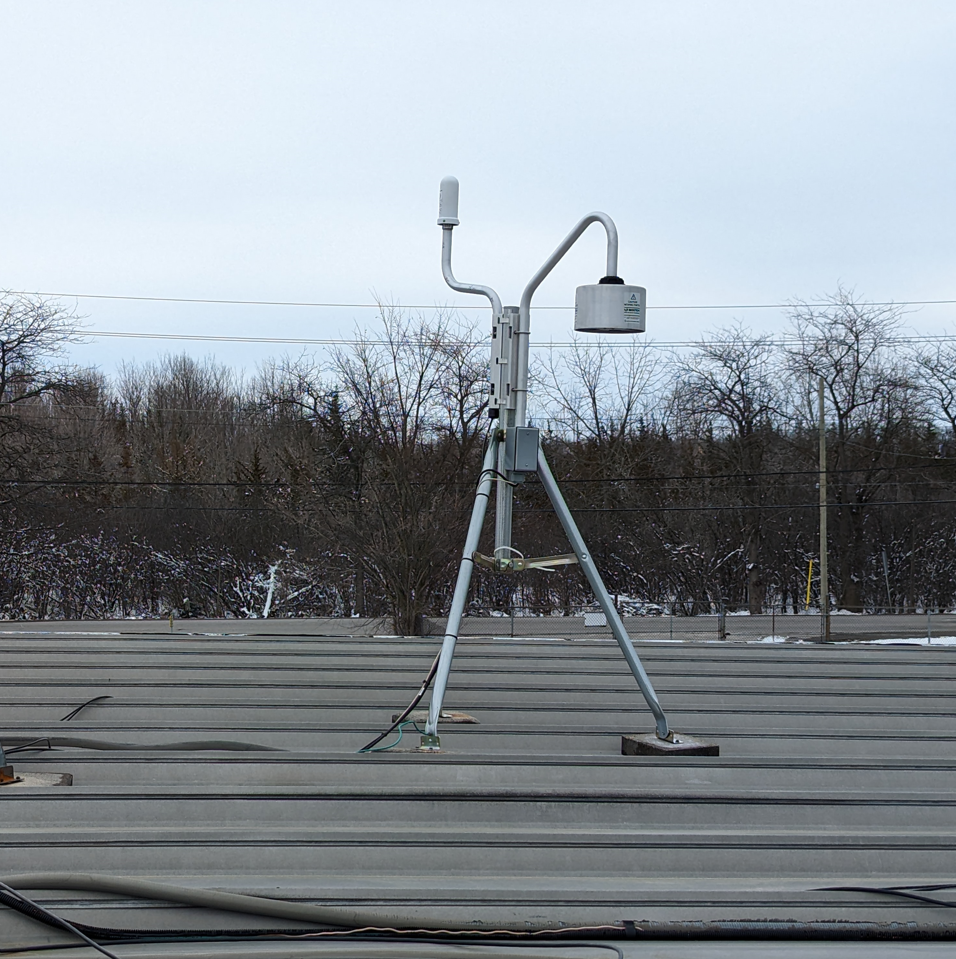
One operational note from the manufacturer's guidance: sensors are roof- or mast-mounted, so testing and maintenance should only be done by personnel with working-at-height training and appropriate safety equipment.
What defines a quote for an airfield lightning system
When sourcing, suppliers will want to know: coverage area and mounting location (roof vs ground mast), alert outputs needed (lights, sounders, relay integrations, software display), cabling distance from sensors to the control module, whether a test gun and commissioning are included, and local electrical standards. Single-site kits are typically supplied with sensor cable runs of around 100 ft as standard, with longer runs available.
Alternatives in this space include networked detection services (subscription data feeds) and standalone thunderstorm detectors such as the Biral BTD-300 — the trade-off is between on-site sensing you own and test yourself versus data services with no local hardware.
Indexed aviation suppliers matching this guide's topic — browse the category or open a supplier profile.