MicroRadar Portable Person-Detection Radar
1 kg portable radar node detecting persons at up to 50 m across a 90-degree field of view inside the Flexnet mesh.
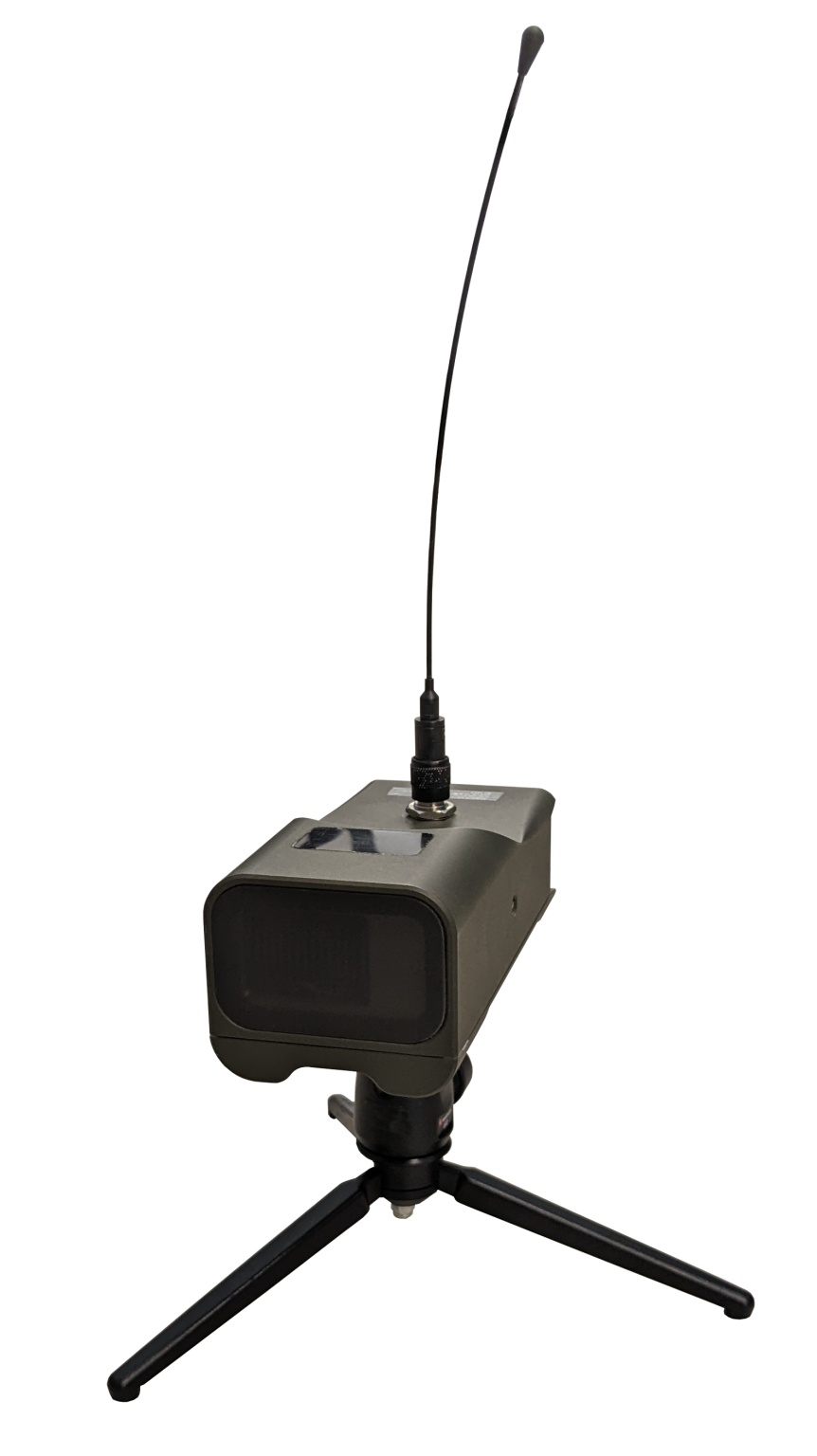
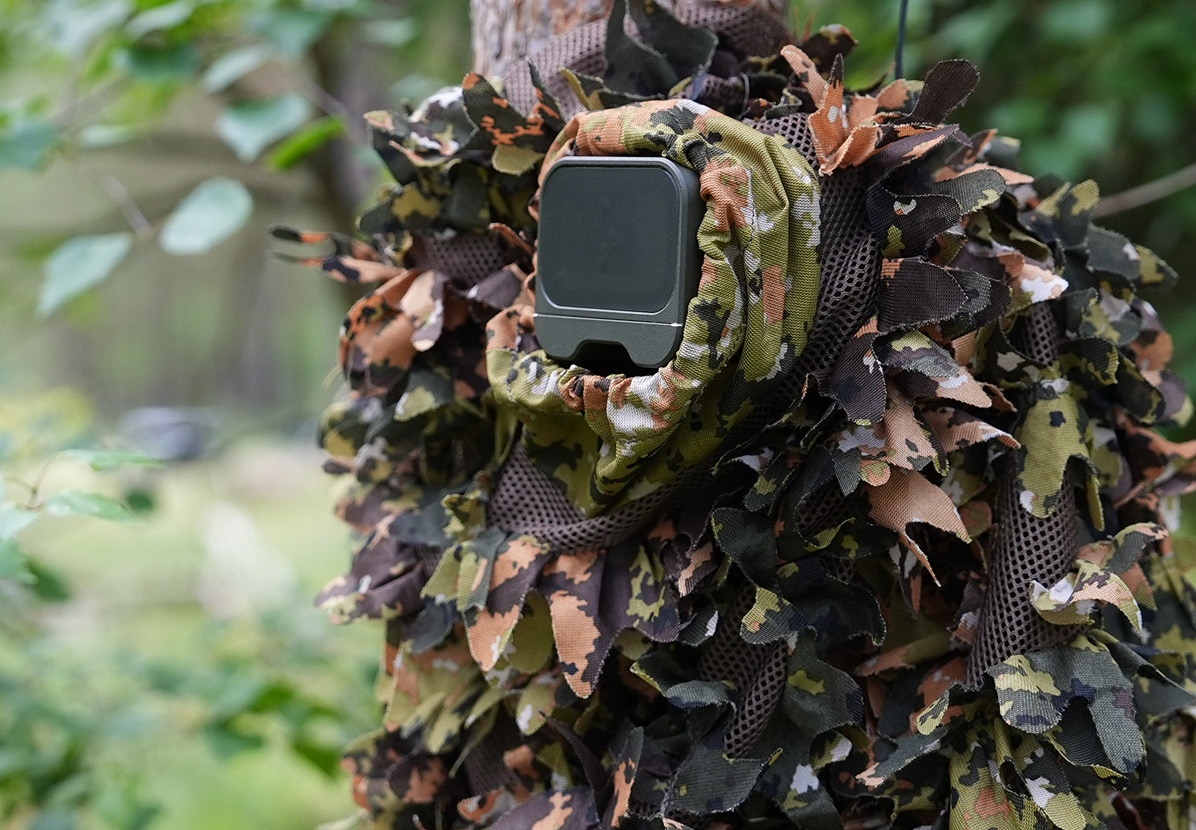
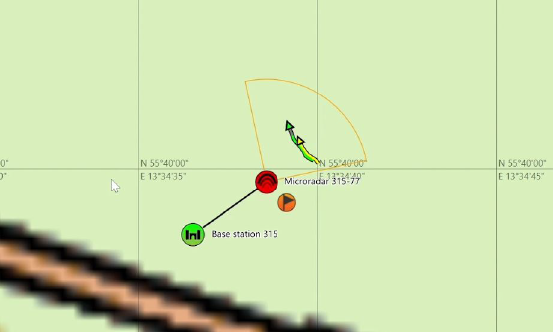
The Flexnet MicroRadar is a small, portable radar unit optimized for person detection at shorter ranges, working as an independent node inside the Flexnet mesh network. It gives the UGS network an active detection layer that does not depend on ground vibration or thermal contrast: the radar detects persons at ranges up to 50 m across a 90-degree field of view, and feeds Cursor on Target information directly into the Flexnet Commander C2 software, where target tracks can be replayed to verify events in specific areas.
Detection schemes are easy to control and optimize: exclusion and inclusion zones shape the coverage, and an adjustable range trigger limit raises alarms only when objects are closer than the set limit, filtering out activity outside the range of interest. Three detection modes manage the power/EMC trade-off. In full detection the radar is continuously on (~1 day battery). In detection-on-trig the radar stays off until triggered by another Flexnet sensor, then powers down again after 10 seconds without objects in its field of view - ideal when a low radio EMC profile is required, and giving roughly 20-30 days of operation (up to ~40 days with an external battery). In low-power detection the unit cycles 4 seconds off / 2 seconds on (~5 days), switching to full detection when an object is detected. Five separate operating channels allow up to five MicroRadars to work with overlapping coverage in the same deployment.
The unit measures 170 x 80 x 70 mm, weighs 1 kg, and like every Flexnet device operates as a mesh node relaying data from other sensors (Mini/Scout/PIR) to the base station. On-demand adaptations include a vehicle-optimized detection mode (run separately or simultaneously with person detection) and fusion of alarms from several devices into one homogenous detection zone. Qualified to MIL-STD-810 and MIL-STD-461, it operates from -32 to +71 degrees C.
Applications include perimeter choke-point coverage at airports and critical infrastructure, compound and forward-operating-base protection, and border-gap surveillance.
Technical specifications.
| Sensing modality | Radar, optimized for person detection at short ranges |
| Detection range | Up to 50 m |
| Field of view | 90 deg |
| Detection modes | Three modes: full detection, detection on trig, low-power detection |
| Full detection mode | Continuously on; does not automatically turn off if no tracks are found (~1 day battery) |
| Detection-on-trig mode | Off until triggered by another Flexnet sensor; returns to power-off after 10 s without objects in FoV; ideal when low radio EMC profile is required |
| Detection tuning | Exclusion and inclusion zones; adjustable range trigger limit to filter activity outside the range of interest |
| Operating channels | 5 separate channels - up to 5 devices with overlapping range covering a larger area |
| Mesh role | Individual node in the Flexnet mesh, relaying data from other sensors (Mini/Scout/PIR) |
| On-demand adaptations | Vehicle-optimized mode (separate or simultaneous with person detection); fusion of alarms from several devices into a homogenous detection zone |
| Target output | Cursor on Target information directly into Flexnet Commander; tracks can be replayed to verify events |
| Low-power mode | Power cycle 4 s off / 2 s on; full detection on object detection, back to save cycle after 10 s without objects (~5 days battery) |
| Battery life (full detection) | ~1 day |
| Battery life (low-power mode) | ~5 days |
| Battery life (detection on trig) | ~20-30 days; up to ~40 days with external battery |
| Operating temperature | -32 to +71 degC |
| Environmental standard | MIL-STD-810 |
| EMC standard | MIL-STD-461 |
| Dimensions | 170 x 80 x 70 mm |
| Weight | 1 kg |
Certifications.
Use cases.
- ›choke-point person detection
- ›compound and FOB perimeter protection
- ›fence-gap radar coverage
- ›sensor-cued triggered detection
Replacements & compatible alternatives.
Comparable products from other suppliers. Cross-shop on specs — confirm exact fit and compatibility with the supplier before specifying.